
There’s something about the crackle of homemade snack chips that takes me back—those lazy afternoons in my childhood, crunching on something crispy and familiar. Baking plantain chips takes that nostalgic crunch and offers it in a way that’s lighter, cleaner, and way more satisfying. No greasy fingers, just pure, golden crispiness that you can feel good about eating.
This recipe isn’t just about the crunch, though. It’s about reclaiming that snack time, making something yourself that’s simple but deeply comforting. Plus, it’s a sneaky way to get more plantains into your diet without the fuss of frying—just a quick bake and you’re set for a snack that’s both crunchy and guilt-free.
Focusing on the nostalgic crunch of homemade snacks, this baked plantain chips recipe is a guilt-free way to indulge in a familiar, comforting texture without the deep-fried oiliness.
The story behind this recipe
- I remember the first time I made baked plantain chips during a lazy weekend. The smell of sweet plantains roasting in the oven, with just a hint of cinnamon, brought me back to family trips to tropical markets. That simple act of slicing and baking transformed a humble ingredient into something addictive, crunchy, and comforting.
- What keeps me coming back is how effortless it is to turn ripe plantains into a snack that’s both satisfying and healthy. I love the way the aroma fills the kitchen—sweet, smoky, with a hint of caramelization—and how they turn out crispy without any fuss or oil splatters.
- heading: The story behind this recipe
Ingredient breakdown
- Plantains: Ripe plantains are sweeter and softer, which gives the chips a richer flavor. Slightly underripe ones will be less sweet and a bit starchy, so choose your ripeness based on your preferred sweetness.
- Olive oil: I prefer a light drizzle of olive oil for a subtle fruity flavor, but you can swap in avocado oil for a higher smoke point and a more neutral taste, especially if you like a crisper chip.
- Salt: I use sea salt for its clean, mineral-rich taste that enhances the plantains’ sweetness. For a milder flavor, reduce the salt or try smoked salt for a smoky twist.
- Optional spices: A pinch of paprika or cinnamon can add warmth and complexity. Keep it light—these are all about highlighting the natural sweetness and crunch.
- Sugar (if using): A tiny sprinkle of sugar can intensify caramelization, but skip it if you prefer a more savory chip. Just a hint helps bring out the golden color and sweet aroma.
- Lemon juice: A squeeze of lemon brightens the flavor and prevents browning. Use it sparingly—just enough to add a fresh, zesty note without overpowering.
- Parchment paper: Essential for preventing sticking, ensuring even baking, and easy cleanup. Don’t skip it—your oven will thank you.
Spotlight on key ingredients
Plantains:
- Ripe plantains are softer and sweeter, giving chips a caramelized flavor. Slightly underripe ones are firmer and less sweet, so choose based on your taste preference.
- Olive oil: I favor a light drizzle of extra virgin for a fruity note, but avocado oil can be a neutral swap that crisps up better at higher heat.
Salt & Spices:
- Sea salt: Mineral-rich and clean, it enhances the natural sweetness. Smoked salt adds depth, and reducing salt keeps the focus on the plantains’ flavor.
- Optional spices: A pinch of paprika or cinnamon adds warmth. Keep it subtle—these are about highlighting that sweet, roasted aroma.
Notes for ingredient swaps
- Ripe Plantains: Fully yellow with black spots, they’re sweeter and softer, perfect for a caramelized crunch. Use less ripe if you want a starchy, firmer chip.
- Olive Oil: I prefer extra virgin for flavor, but avocado oil offers a higher smoke point and neutral taste if you want crispier chips without the fruity note.
- Salt: Sea salt gives that mineral punch, but smoked salt adds a smoky layer. For a milder flavor, try pink Himalayan salt.
- Spices: Paprika or cinnamon can warm up the flavor. If you want a more savory profile, skip the spices or add a pinch of garlic powder.
- Sugar: Just a pinch boosts caramelization and golden color, but skip it for a more natural, sweet-free chip.
- Lemon Juice: Brightens the flavor and prevents browning. Lime juice can be a citrusy alternative with a slightly different zing.
- Parchment Paper: Essential for non-stick baking and easy cleanup. Silicone baking mats are a handy reusable swap.
Equipment & Tools
- Mandoline or sharp knife: For even, thin slicing of plantains.
- Baking sheet: To hold the chips during baking.
- Parchment paper: To prevent sticking and ease cleanup.
- Mixing bowl: To toss slices with oil and seasonings.
- Spatula or tongs: To flip slices halfway through baking.
Step-by-step guide to baked plantain chips
- Gather all equipment and preheat your oven to 180°C (350°F). Line a baking sheet with parchment paper for easy cleanup.
- Peel the plantains and slice them thinly, about 1/8 inch (3 mm), using a sharp knife or mandoline for even thickness.
- Place the sliced plantains in a bowl, drizzle with 1-2 teaspoons of olive oil, and toss gently to coat each piece evenly.
- Sprinkle with a pinch of sea salt and optional spices like paprika or cinnamon for added flavor. Toss again to distribute.
- Arrange the slices in a single layer on the prepared baking sheet, making sure they don’t overlap to ensure crispiness.
- Bake for 12-15 minutes, flipping halfway through. Keep an eye on them; they should turn golden and crispy around 14 minutes.
- Check for doneness: chips should be golden, firm but with a slight snap when bent, and smell sweetly roasted.
- If edges are darkening too quickly, reduce oven temperature slightly or remove chips earlier to prevent burning.
- Remove from oven and let the chips rest on the sheet for 2-3 minutes—they’ll crisp up further as they cool.
- Transfer to a wire rack if needed, and serve once completely cooled. Store in an airtight container for up to 3 days.
Allow the chips to cool completely on a wire rack to maximize crunch before serving. Serve in a bowl or store in an airtight container once cooled.
How to Know It’s Done
- Color: Chips should be golden and crisp, not burnt or pale.
- Texture: They should crackle when bitten, not bend or be chewy.
- Aroma: Expect a sweet, smoky scent with caramel notes.
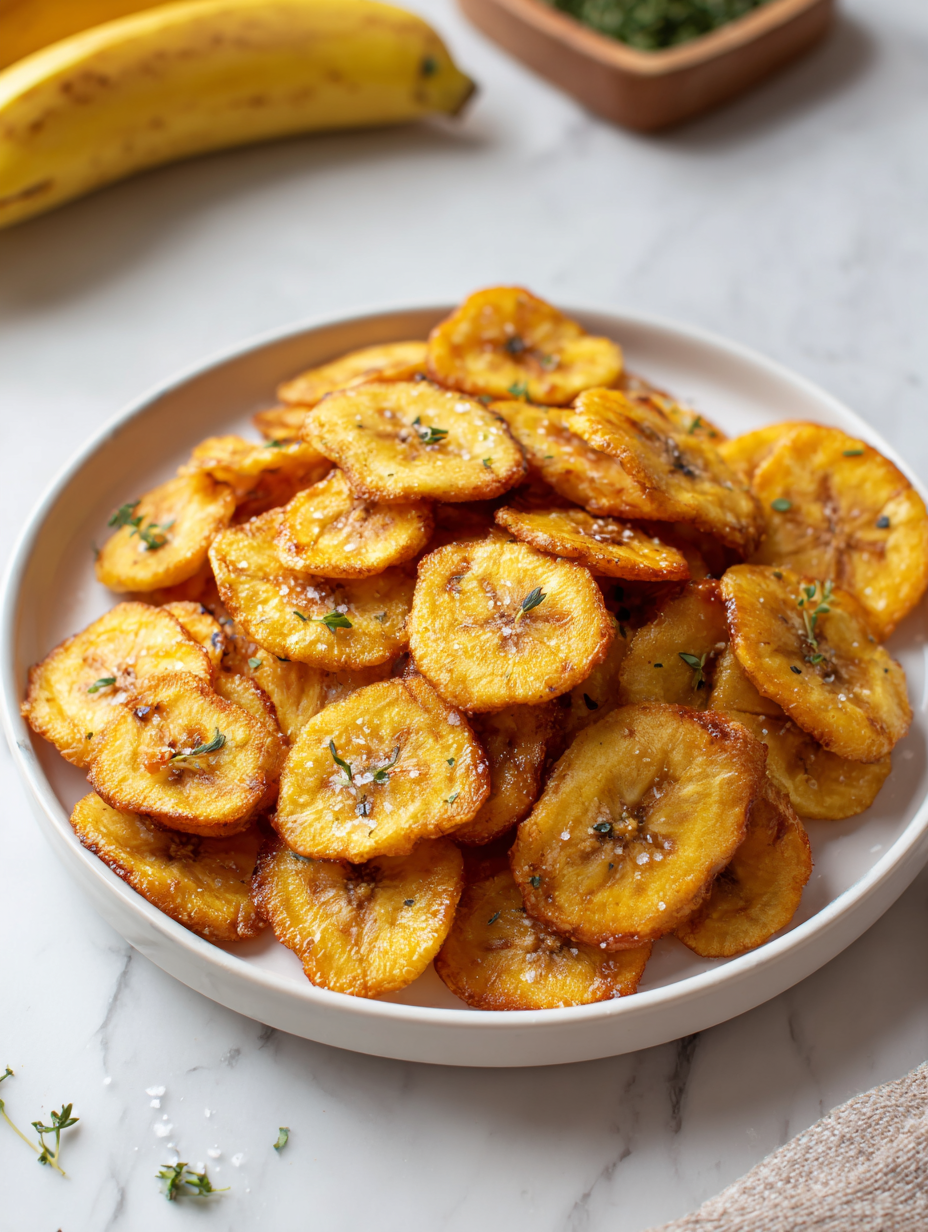
Baked Plantain Chips
Ingredients
Equipment
Method
- Preheat your oven to 180°C (350°F) and line a baking sheet with parchment paper.
- Peel the plantains and slice them as thinly and evenly as possible using a mandoline or a sharp knife—aim for about 1/8 inch thickness.
- Place the sliced plantains in a mixing bowl, drizzle with olive oil, and gently toss to coat each slice evenly—this helps them crisp up during baking.
- Sprinkle the slices with sea salt and optional spices like paprika or cinnamon, then toss gently again to distribute the seasonings evenly.
- Arrange the slices in a single layer on the prepared baking sheet, making sure they don’t overlap for even baking and crisping.
- Bake in the oven for about 12-15 minutes, flipping the slices halfway through, until they turn golden brown and crispy—listen for that satisfying crunch and watch for even color.
- Once they’re beautifully golden and crispy, remove the chips from the oven and let them rest on the sheet for 2-3 minutes to firm up further.
- Spritz a little lemon or lime juice over the chips for a bright flavor and to prevent discoloration—this adds a fresh zing.
- Transfer the chips to a wire rack to cool completely and crisp up further—then enjoy your homemade, guilt-free snack!
Notes
Pro tips for perfect baked plantain chips
- Thin slices are key → Use a mandoline for uniform, crispy chips every time.
- Even spacing matters → Arrange slices in a single layer, no overlapping, for consistent baking.
- Watch the color → Remove chips when they’re golden and crisp, not too dark or burnt.
- Flip halfway → Turn slices at 8 minutes to promote even browning and crunch.
- Cool before storing → Let chips rest on a wire rack to crisp up fully and avoid sogginess.
- Watch the oven → Keep an eye in the last few minutes; they can go from perfect to burnt quickly.
- Use parchment paper → Prevent sticking and make cleanup easier, ensuring crispy edges.
Common mistakes and their fixes
- FORGOT to check oven temperature → Ensure oven is accurately calibrated before baking.
- DUMPED sliced plantains too close → Spread slices evenly to prevent sticking and uneven crispness.
- OVER-TORCHED edges → Remove chips early or lower oven temperature for even browning.
- MISSED resting time → Let chips cool on a wire rack to maximize crunch and prevent sogginess.
Quick fixes and pantry swaps
- When chips burn quickly, splash a bit of water in the oven and quickly close the door to create steam.
- If chips stick to the parchment, patch with a thin layer of oil and gently peel away once cooled.
- Splash a squeeze of lemon juice if chips turn out dull or lack brightness after baking.
- Dumped slices unevenly? Rearrange on the sheet and bake a few extra minutes for uniform crispness.
- When chips are soggy, shake them in a paper towel and return to oven for 2-3 minutes to crisp up.
Prep, store, and reheat tips
- Slice plantains ahead of time and store in an airtight container in the fridge for up to 24 hours to prevent browning and maintain crispness.
- You can bake the chips a day in advance; store once completely cooled in an airtight container for up to 3 days, keeping them crisp and fresh.
- Reheat by placing chips in a 180°C (350°F) oven for 3-5 minutes; they’ll regain some crunch and warm aroma, with a slight shimmer of oil on the surface.
- For best texture, avoid storing in the fridge for more than a day as moisture can make them soggy. Keep in a cool, dry place if eating within a day.
Top questions about baked plantain chips
1. Can I use green plantains instead?
Use very ripe plantains with black spots for the sweetest, crispiest chips. Less ripe ones will be firmer and less sweet, so pick based on your taste preference.
2. How thin should I slice the plantains?
Slice thinly and evenly, around 1/8 inch. Thinner slices will crisp up better and give you that satisfying crunch.
3. What temperature and time are best for baking?
Bake at 180°C (350°F) for about 12-15 minutes. Keep an eye on them after 10 minutes to prevent burning and ensure perfect golden color.
4. Can I spice up my chips?
Yes, you can add spices like paprika or cinnamon before baking. Just toss the slices with a little oil and spices for extra flavor.
5. How should I store and reheat leftovers?
Store cooled chips in an airtight container for up to 3 days. Reheat in a 180°C (350°F) oven for 3-5 minutes to restore crispness.
6. Do I need special baking equipment?
Use parchment paper for easy cleanup and even baking. If chips stick, gently peel them off once cooled.
7. What if my chips aren’t crispy?
If chips are chewy or soggy, return them to the oven for a few minutes. For uneven browning, flip slices halfway through baking.
8. Can I substitute the oil?
Choose olive oil for a fruity flavor, or swap in avocado oil for a neutral, higher smoke point option that crisps better.
9. Should I add citrus juice?
Adding a squeeze of lemon brightens the flavor and prevents browning. Lime juice offers a similar zesty note.
10. How do I ensure even baking?
Ensure even slices and arrange them in a single layer on the baking sheet. Overlapping slices prevent proper crisping and can cause uneven baking.
Making these baked plantain chips is a small act of culinary rebellion—crisp, sweet, and totally addictive without the oil splatters. It’s surprising how such simple ingredients can transform into a snack that feels both nostalgic and fresh, especially when you get that perfect golden crunch. Sometimes, the best bites are the ones you make yourself, quietly reclaiming snack time from the bag.
Now, after trying this recipe, I find myself reaching for plantains more often—those caramelized edges, the smoky aroma, and that satisfying snap are hard to beat. It’s a humble treat that reminds me that good, honest food doesn’t need to be complicated or greasy to be truly delicious.