
Sometimes, the simplest ingredients hide the most complex flavors. Roasting almonds is one of those quiet arts—slow, patient, and utterly rewarding. When you crack open a batch of freshly roasted almonds, it’s like uncovering a smoky, fragrant treasure that’s been quietly waiting in your pantry.
I keep a jar of these on hand at all times, especially when I need a snack that feels both indulgent and satisfying. The process of roasting transforms the nut’s natural oils, releasing a deep aroma and giving it a crunch that’s just right—neither too soft nor overly brittle. It’s a humble step that elevates almonds from snack to ingredient, perfect for everything from salads to baked goods.
There’s something meditative about roasting almonds—you watch them turn from pale to golden, smell their nutty perfume fill the kitchen, and know you’ve unlocked a little bit of magic with just heat and time. It’s a small ritual that makes everyday snacking feel a bit more special, a reminder that good flavor often comes from simple, honest methods.
Focusing on the overlooked art of roasting almonds to unlock their true flavor potential, transforming simple nuts into a versatile snack or ingredient with a deep, smoky aroma and a satisfying crunch that elevates any dish.
The story behind this recipe
- I first started roasting almonds on a whim, trying to salvage a batch that was a little stale. The aroma that filled the kitchen was unexpectedly inviting—smoky and warm, with a hint of caramelization. That moment made me realize how roasting can elevate even the simplest ingredients into something richer and more complex.
- Over the years, I’ve come to rely on this technique not just for snacking but as a cornerstone for salads, desserts, and snack mixes. It’s a small act—just heat, a little patience—that transforms bland nuts into a deeply fragrant, crunchy treat that always feels special.
- There’s a quiet satisfaction in watching almonds turn from pale to golden, knowing that their flavor has deepened. It’s an honest, unpretentious process that reminds me how simple heat can unlock big flavor—no fancy equipment needed, just a good eye and a little patience.
Key ingredients and tips
- Raw almonds: I prefer the natural, slightly oily feel of fresh almonds—look for ones with tight skins and no shriveled spots. You can swap in blanched almonds if you want a milder, less oily flavor.
- Salt: I add a pinch of flaky sea salt for contrast—think of that burst of salty crunch. If you’re avoiding salt, a sprinkle of smoked paprika gives a smoky kick instead.
- Oil (optional): Just a light coating of neutral oil like grapeseed helps the seasoning stick and enhances caramelization. Skip it for a leaner snack, but your almonds might not get that glossy, toasted finish.
- Sugar (optional): A dusting of fine sugar can add a subtle sweetness and caramel hue. For a savory twist, skip the sugar and sprinkle on chili powder after roasting.
- Spices: I love tossing almonds with cinnamon or cayenne before roasting—experiment with warming or fiery flavors. Use ground spices sparingly to prevent burning during roasting.
- Vanilla extract (optional): Just a drop mixed in before roasting creates a fragrant, sweet undertone. Skip it if you prefer a pure, nutty flavor or want to keep it simple.
- Flavorings (herbs, zest): Fresh thyme, lemon zest, or rosemary can be added after roasting for a fresh, aromatic layer. Add these when almonds are warm but not hot enough to wilt herbs.
Spotlight on key ingredients
Almonds:
- Raw almonds: I prefer the natural, slightly oily feel of fresh almonds—look for ones with tight skins and no shriveled spots. You can swap in blanched almonds if you want a milder, less oily flavor.
- Salt: I add a pinch of flaky sea salt for contrast—think of that burst of salty crunch. If you’re avoiding salt, a sprinkle of smoked paprika gives a smoky kick instead.
Salt and Oil:
- Salt: I add a pinch of flaky sea salt for contrast—think of that burst of salty crunch. If you’re avoiding salt, a sprinkle of smoked paprika gives a smoky kick instead.
- Oil (optional): Just a light coating of neutral oil like grapeseed helps the seasoning stick and enhances caramelization. Skip it for a leaner snack, but your almonds might not get that glossy, toasted finish.
Notes for ingredient swaps
- Dairy-Free: Omit butter or milk—just roasted almonds for pure, nutty flavor.
- Sweetener Swap: Honey or maple syrup can replace sugar, adding a sticky, floral note.
- Salt Alternative: Use soy sauce or tamari for a salty, umami punch—watch for added moisture.
- Spice Variations: Smoked paprika or cumin can replace chili powder for different smoky or earthy tones.
- Oil Choices: Coconut oil gives a subtle sweetness and aroma; olive oil adds a fruitier note, but can be more pungent.
- Flavor Boost: Toss with vanilla extract or lemon zest after roasting—these quick additions brighten the almonds.
- Herb Add-ins: Fresh thyme or rosemary after roasting lend a fragrant, herbal touch—use sparingly for balance.
Equipment & Tools
- Baking sheet with rim: To hold the almonds during roasting and prevent spillage.
- Parchment paper: For easy cleanup and preventing sticking.
- Mixing bowl: To toss almonds with oil and seasonings.
- Cooling rack or tray: To cool almonds evenly after roasting.
Step-by-step roasting guide
- Preheat your oven to 180°C (350°F). Use a baking sheet with a rim to prevent nuts from sliding off. Line it with parchment for easy cleanup.
- Measure out 2 cups of raw almonds. If you prefer a touch of flavor, toss them with 1 teaspoon of neutral oil and a pinch of sea salt in a bowl. Spread evenly on the baking sheet.
- Place the tray in the oven and roast for 10-12 minutes. Shake the pan halfway through to promote even browning. Keep an eye out for a warm, nutty aroma filling the kitchen.
- After 10 minutes, check the almonds. They should be golden and fragrant. If not, roast for another 2 minutes, but watch closely to prevent burning.
- Remove from the oven and let the almonds cool on the tray for 5 minutes. They will crisp up further as they cool, locking in their toasted flavor.
- Once cooled, taste a few. If they need more salt or spice, toss with a pinch of smoked paprika or chili powder while still warm. Mix well to coat evenly.
- Transfer to a jar or an airtight container. Store at room temperature for up to 2 weeks. For longer storage, refrigerate for up to a month.
- For serving, give the almonds a quick shake or stir to redistribute any seasonings. They should be crunchy, fragrant, and just a little smoky.
Let the almonds cool completely on the tray. Once cooled, transfer to an airtight jar. They taste best after a few hours when flavors meld, but are still crunchy and fragrant right after roasting.
How to Know It’s Done
- Almonds are golden and fragrant, not pale or burnt.
- They feel firm and crunchy when cooled, not soft or rubbery.
- Surface is evenly toasted with a slight sheen from natural oils.
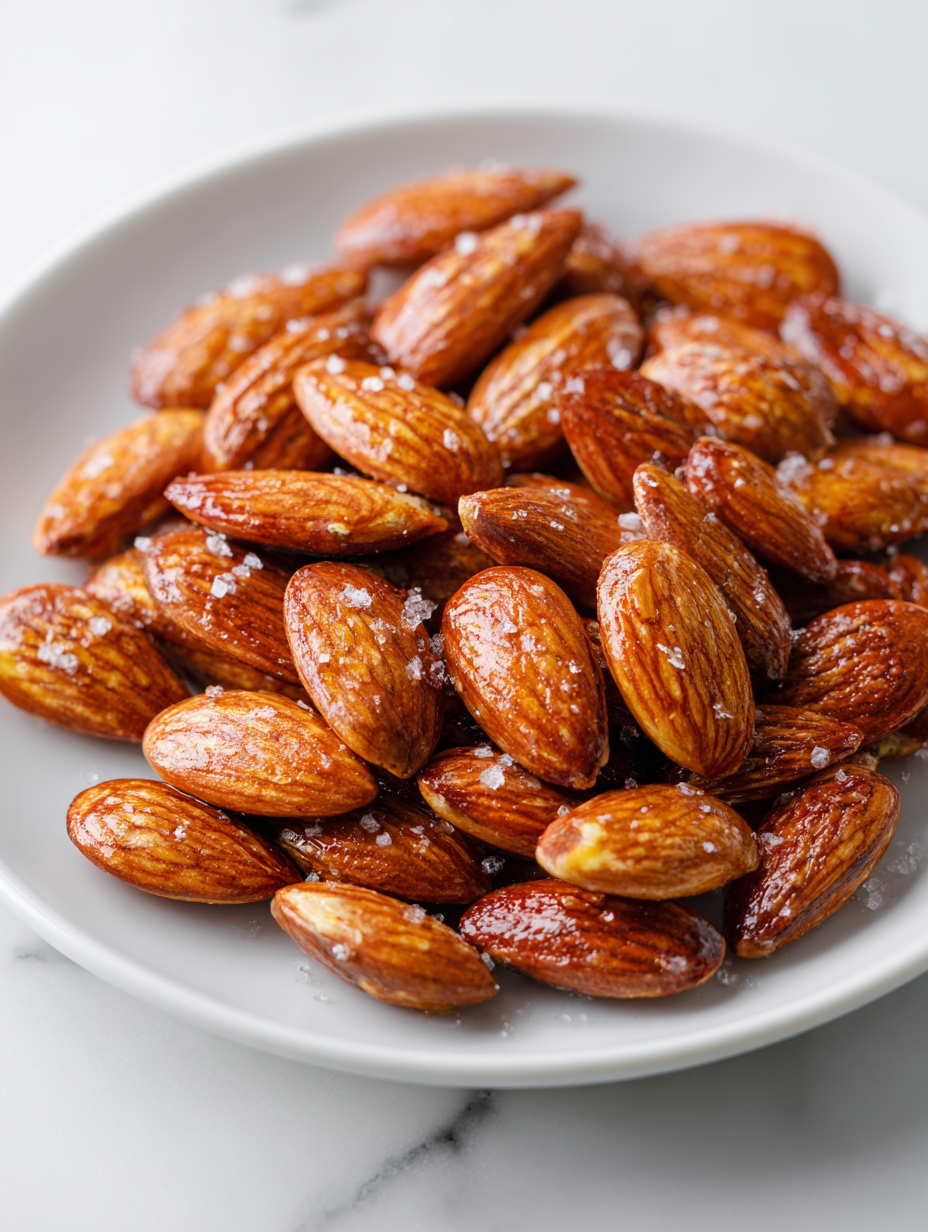
Roasted Almonds
Ingredients
Equipment
Method
- Preheat your oven to 180°C (350°F) and line a rimmed baking sheet with parchment paper.
- Measure out two cups of raw almonds and place them in a mixing bowl.
- If desired, toss the almonds with a teaspoon of neutral oil and a pinch of sea salt to enhance flavor and promote even toasting.
- Spread the almonds evenly on the prepared baking sheet in a single layer, ensuring they are not overlapping.
- Place the tray in the oven and roast for 10-12 minutes, shaking the pan halfway through to promote even browning. The almonds will begin to release a warm, nutty aroma and turn a golden color.
- Check the almonds at the 10-minute mark; they should be fragrant and golden. If they need more color, roast for an additional 1-2 minutes, keeping a close eye to prevent burning.
- Remove the almonds from the oven and transfer them to a cooling rack. Let them cool for about 5 minutes, which will help them crisp up further.
- If you like, sprinkle a tiny bit of additional sea salt or your favorite spices onto the warm almonds and toss gently to coat evenly. The residual warmth helps seasonings adhere.
- Once cooled completely, transfer the almonds to an airtight jar or container. They are best enjoyed within two weeks for maximum freshness and crunch.
- Enjoy these fragrant, crunchy roasted almonds as a snack or chopped and added to salads, desserts, or trail mixes.
Pro tips for perfect almonds
- Bolded mini-head: Keep almonds in a single layer for even roasting—spread them out on the tray without overcrowding.
- Bolded mini-head: Shake the pan halfway through roasting—this redistributes heat and promotes uniform browning.
- Bolded mini-head: Smell for a warm, nutty aroma—once you detect it, almonds are close to done, even if they look pale.
- Bolded mini-head: If almonds start to look too dark around the edges—remove immediately to prevent bitterness.
- Bolded mini-head: Cool almonds on a rack for a crisp finish—hot almonds can turn soggy if left in the pan.
- Bolded mini-head: Toss warm almonds with seasonings—this helps flavors stick and enhances the toasted aroma.
- Bolded mini-head: Store in an airtight jar—keeps almonds fresh and crunchy for up to two weeks at room temperature.
Common mistakes and how to fix them
- FORGOT to check almond color during roasting → Ensure almonds turn golden, not burnt.
- DUMPED oil on almonds after roasting → Toss almonds lightly in oil while warm for even coating.
- OVER-TORCHED almonds → Remove from oven immediately once fragrant and golden.
- FAILED to cool almonds properly → Cool on a rack to avoid sogginess and maintain crunch.
Quick fixes and pantry swaps
- If smoke appears, splash water in the oven to dissipate fumes quickly.
- When almonds are burnt, immediately transfer to a clean tray and reduce roasting time next batch.
- Dumped too much salt? Rinse almonds quickly with cold water, dry, then roast again lightly.
- Over-torched almonds? Rescue by tossing with lemon zest or a drizzle of honey to mask bitterness.
- Shield almonds from uneven heat by shaking the pan often—cracks and shimmer indicate even roasting.
Prep, store, and reheat tips
- Prepare roasted almonds up to a week in advance; store in an airtight container at room temperature, where they’ll stay crunchy and fragrant.
- You can roast almonds and keep them in the fridge for up to 2 weeks or freeze for up to a month—just let them come to room temp before eating for best texture.
- Flavors may deepen slightly after a day or two, but the crunch remains intact if kept sealed and dry.
- Reheat roasted almonds briefly in a 150°C (300°F) oven for 3-5 minutes if you want to revive their aroma and crispness—listen for a crackling sound and smell the warm, nutty scent.
Top questions about roasted almonds
1. How do I pick good almonds?

Look for almonds that are plump, with tight skins and no shriveled spots. Fresh almonds have a slight oily sheen and smell nutty. Swap with blanched almonds if you want a milder flavor with less oiliness.
2. How do I know when almonds are perfectly roasted?
Preheat your oven to 180°C (350°F). Spread almonds in a single layer on a rimmed baking sheet. Roast for 10-12 minutes, shaking halfway through. Look for a fragrant, golden color and a nutty aroma as signs of readiness.
3. Can I add oil or seasonings before roasting?
Toss almonds with a little neutral oil and a pinch of salt before roasting for extra flavor and shine. If you prefer them leaner, skip the oil, but they might not toast as evenly or develop that glossy finish.
4. How long can I store roasted almonds?
Yes, you can prepare roasted almonds ahead. Store in an airtight container at room temperature for up to 2 weeks, or refrigerate for longer freshness. Reheat briefly at 150°C (300°F) for 3-5 minutes to refresh the aroma and crunch.
5. What if my almonds burn?

When almonds turn too dark or smell burnt, remove them immediately to prevent bitterness. If they start to burn, quickly transfer to a cool plate and reduce oven temperature for next time.
6. How do I get evenly roasted almonds?
Keep almonds in a single layer on the baking sheet and shake the pan halfway through roasting. This ensures even browning and prevents uneven patches, especially near the edges.
7. What if my almonds taste bitter?
If almonds smell smoky or have a bitter taste, they may be overdone. Remove from heat immediately and cool. For future batches, reduce roasting time or temperature slightly.
8. How should I cool roasted almonds?
Use a cooling rack or spread almonds on a flat surface to cool after roasting. This prevents sogginess, helps maintain crunch, and stops residual heat from overcooking them.
9. Can I add flavors after roasting?

Sprinkle with spices like cinnamon or chili powder immediately after roasting while almonds are still warm. This helps the flavors adhere better and intensifies the aroma.
10. Can I customize the seasonings?
Yes, you can swap ingredients—use maple syrup instead of sugar for a sticky, sweet coating or smoked paprika for a smoky flavor. Adjust seasonings to taste, but keep an eye on oven times to avoid burning.
Roasted almonds are a small but mighty upgrade to everyday snacking. The deep, smoky aroma and satisfying crunch make them impossible to resist. Once you’ve mastered this simple process, you’ll find endless ways to incorporate them into your kitchen routine.
They’re perfect for adding a touch of richness to salads, desserts, or just enjoying straight from the jar. Plus, knowing you roasted them yourself adds a layer of pride to every handful. Sometimes, the simplest ingredients hold the most surprising depth.