
I’ve always loved veggie balls, but I got bored with the usual suspects—zucchini, carrots, you know the drill. One day, I decided to play with roasted fennel and sweet potato, and the flavor just… it blossomed. The natural sweetness from the sweet potato complements the smoky, slightly aniseed note of fennel in a way that feels both familiar and surprising.
This recipe isn’t about perfection; it’s about embracing those imperfect, cozy moments in the kitchen. The aroma of roasting fennel and caramelizing sweet potato fills the house, making everyone ask what’s for dinner. It’s a simple dish, but the unexpected depth of flavor makes it feel like a little celebration in every bite.
Focusing on a less typical ingredient—like roasted fennel or sweet potato—adds unexpected depth and natural sweetness to veggie balls, transforming them from simple snacks into a complex, savory experience.
Unexpected ingredients for depth
- Discovering how roasted fennel brings a smoky, slightly sweet edge to veggie balls changed my entire approach to veggie cooking.
- I remember the first time I made these, the house was filled with a warm, spicy aroma that made everyone gather around the kitchen.
- There’s something deeply satisfying about turning humble vegetables into something that feels hearty and indulgent, even on busy weeknights.
- Every time I make these, I feel a little proud of turning simple ingredients into a dish that feels special and unexpected.
The inspiration behind this dish
- I stumbled upon this recipe when I had a fridge full of odds and ends after a busy week. I wanted something nourishing yet flexible enough to use what I had on hand. The idea of turning vegetables into bite-sized, crispy balls just stuck with me; it’s a bit like transforming leftovers into something special.
- Every time I make these, I think about how much comfort a simple, honest dish can bring. It’s a reminder that you don’t need fancy ingredients or complicated techniques—to get something flavorful, just trust your pantry and your instincts. Plus, the smell of these baking up crispy and golden is a little cheat code for instant homey vibes.
- heading
- story_type
Veggie Balls Trivia
- Veggie balls have roots in Mediterranean mezze, where small, savory bites were meant for sharing around the table.
- This particular form of vegetable patties became popular in vegetarian cuisines during the 20th century as a hearty meat substitute.
- Many traditional recipes incorporate herbs and spices specific to regional cuisines, giving each version a unique cultural signature.
Key ingredients and their quirks
- Carrots: I love how their natural sweetness intensifies when roasted, giving the veggie balls a gentle, caramelized flavor. Feel free to swap in parsnips for a subtler, earthier note.
- Chickpeas: These add a creamy texture and protein boost. If you prefer a firmer bite, try black beans instead, but watch out for added moisture, which can make the mixture too wet.
- Breadcrumbs: They hold everything together and give a slight crunch. For gluten-free, try crushed rice crackers or oats—just toast them lightly first for flavor.
- Herbs (parsley, cilantro): Fresh herbs brighten the mix with a grassy, fresh aroma. Use basil or mint if you want a different, vibrant twist—just add a little at a time.
- Olive oil: It helps everything brown up nicely and adds a fruity richness. For a smoky depth, swap in a bit of smoked paprika mixed into the oil before frying.
- Garlic: It’s the backbone of flavor—roasted garlic brings a mellow sweetness, raw garlic a punch. Adjust quantity based on your prefered intensity.
- Lemon zest: Brightens the overall flavor with a citrusy zing. If you’re out, a splash of vinegar can mimic that fresh, tangy feel.
Spotlight on key ingredients
Carrots and chickpeas:
- Carrots: I love how their natural sweetness intensifies when roasted, giving the veggie balls a gentle, caramelized flavor. Feel free to swap in parsnips for a subtler, earthier note.
- Chickpeas: These add a creamy texture and protein boost. If you prefer a firmer bite, try black beans instead, but watch out for added moisture, which can make the mixture too wet.
- Breadcrumbs: They hold everything together and give a slight crunch. For gluten-free, try crushed rice crackers or oats—just toast them lightly first for flavor.
Notes for ingredient swaps
- Dairy-Free: Swap eggs for mashed avocado or a flaxseed slurry—adds moisture, but watch for a slightly different texture.
- Gluten-Free: Use crushed rice crackers or oats instead of breadcrumbs—still holds together, with a nuttier bite.
- Vegan: Replace eggs with a tablespoon of chia or flaxseed gel—helps bind, keeps these veggie balls plant-based.
- Nut-Free: Omit nuts or nut-based ingredients; focus on more vegetables or seeds for added crunch and nutrition.
- Extra Smoky: Add a pinch of smoked paprika or chipotle powder—brings a deep, smoky aroma and flavor.
- Herb Variations: Use basil or dill instead of parsley or cilantro—each brings a fresh, distinct note to the mix.
- Sweetening: Mix in a teaspoon of honey or maple syrup—adds a subtle sweetness, balancing the savory flavors.
Equipment & Tools
- Baking sheet: Roast vegetables evenly and caramelize edges.
- Mixing bowls: Combine ingredients thoroughly.
- Large skillet: Fry the veggie balls to crisp them up.
- Spatula: Turn and handle the veggie balls during frying.
- Parchment paper: Prevent sticking and for easy cleanup.
Guide to Perfect Veggie Balls
- Gather your equipment: a baking sheet, mixing bowls, a large skillet, and a spatula. Preheat your oven to 200°C (390°F).
- Roast the vegetables: chop fennel and sweet potato into small chunks. Toss with olive oil, salt, and pepper. Roast on a lined tray for 25-30 minutes until caramelized and fragrant.
- Let the roasted veggies cool slightly, about 5 minutes. Meanwhile, drain and rinse chickpeas. Mash them roughly in a bowl.
- Finely chop herbs and garlic. Add to the chickpeas along with the roasted fennel and sweet potato. Mix well to combine.
- Stir in breadcrumbs gradually until the mixture holds together when pressed. If too wet, add a few more breadcrumbs. If too dry, splash with a little water or olive oil.
- Shape the mixture into small balls, about 1.5 inches diameter. Place them on a parchment-lined baking sheet, spaced evenly.
- Heat a tablespoon of oil in a large skillet over medium heat (about 160°C/320°F).
- Cook the veggie balls in batches, turning occasionally, for about 8-10 minutes until golden and crispy all over. They should crackle as they cook and smell nutty.
- Remove from heat and let rest for 2-3 minutes. Serve warm, garnished with fresh herbs or a squeeze of lemon if desired.
Let the veggie balls rest for a few minutes on a plate. Serve with your favorite sauce or a simple salad, ensuring they stay crispy and flavorful.
How to Know It’s Done
- Veggie balls are golden-brown and crispy outside, tender inside.
- They crackle when cooked, indicating proper crispness.
- They hold their shape well when gently pressed, not falling apart.
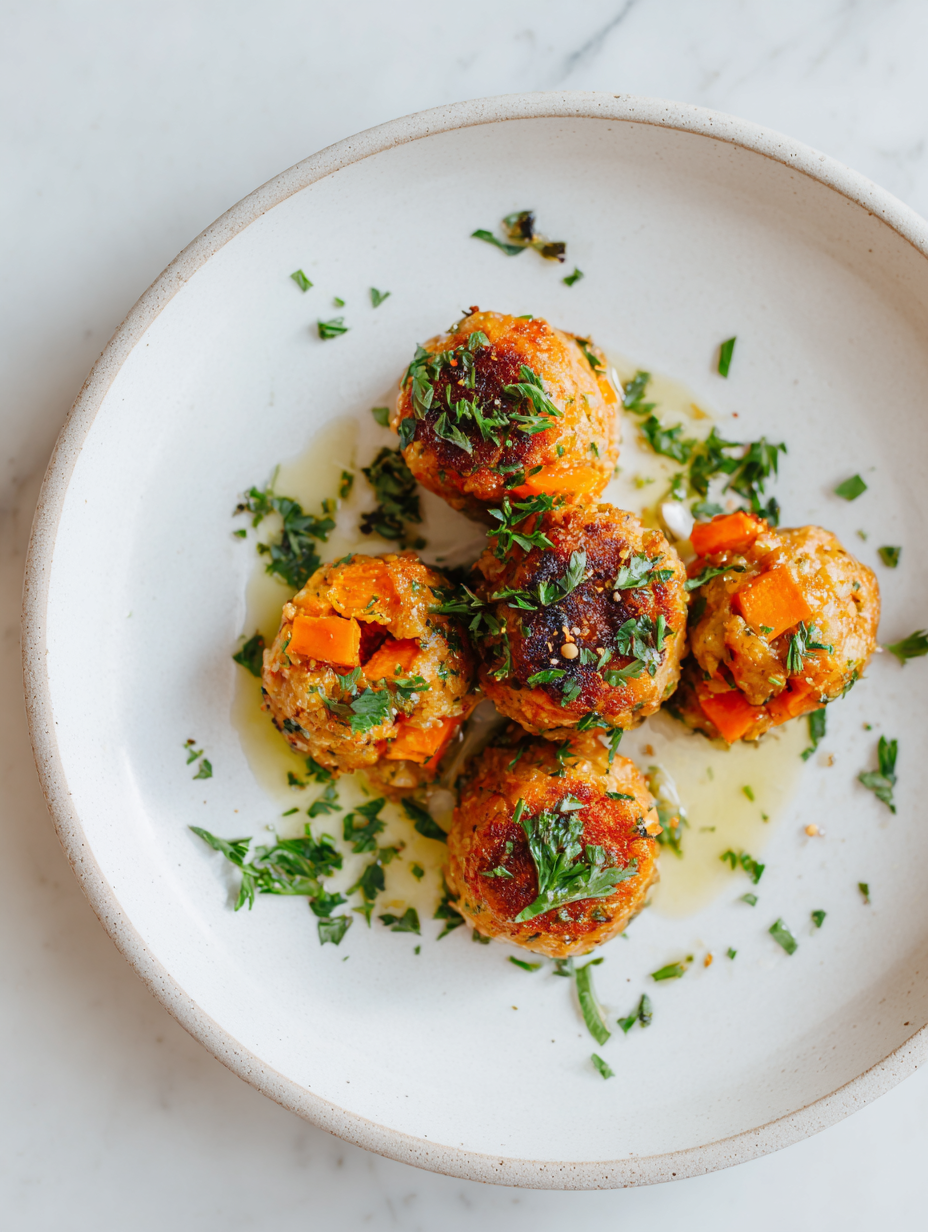
Roasted Fennel and Sweet Potato Veggie Balls
Ingredients
Equipment
Method
- Preheat your oven to 200°C (390°F). Line a baking sheet with parchment paper and spread the sliced fennel and cubed sweet potato evenly. Toss with a tablespoon of olive oil, salt, and pepper. Roast for 25-30 minutes until caramelized and fragrant, then remove and let cool slightly.
- While the vegetables cool, drain and rinse the chickpeas. In a large mixing bowl, mash the chickpeas with a fork until mostly smooth but with some texture remaining.
- Finely chop the roasted fennel and sweet potato, then add them to the mashed chickpeas. Stir in minced garlic, chopped parsley, lemon zest, and half of the olive oil. Mix until well combined.
- Gradually add breadcrumbs to the mixture, stirring continuously until the mixture holds together when pressed. If it feels too wet, add a little more breadcrumbs; if too dry, splash in a teaspoon of water or olive oil.
- Using your hands, shape the mixture into small balls about 1.5 inches in diameter and place them on the prepared baking sheet, spacing them evenly.
- Heat the remaining tablespoon of olive oil in a large skillet over medium heat. Once shimmering, add the veggie balls, cooking in batches if necessary.
- Cook the veggie balls for about 8-10 minutes, turning gently with a spatula, until they are golden brown and crispy on all sides. They should crackle softly as they fry and smell nutty.
- Remove the veggie balls from the skillet and place on a paper towel-lined plate to drain excess oil. Let them rest for a couple of minutes to firm up.
- Serve the veggie balls warm, garnished with additional herbs or a squeeze of lemon if desired. They are perfect on their own or with a dipping sauce.
Pro Tips for Perfect Veggie Balls
- Bolded mini-head: Use a gentle hand when mixing to avoid compacting the mixture, which can lead to dense veggie balls.
- Bolded mini-head: Chill the mixture for 15-20 minutes before shaping—this firm-up makes forming easier and helps them hold shape during cooking.
- Bolded mini-head: When frying, maintain a steady medium heat (around 160°C/320°F)—too hot and they burn outside, too low and they won’t crisp.
- Bolded mini-head: Use a cookie scoop or spoon to get uniform-sized veggie balls for even cooking and presentation.
- Bolded mini-head: To check doneness, listen for a crackling sound and look for a golden, crispy exterior—internal texture should be tender but firm.
- Bolded mini-head: Rest finished veggie balls on a wire rack for a few minutes to keep them crispy and prevent sogginess.
- Bolded mini-head: For extra crunch, finish by broiling the veggie balls on high for 1-2 minutes—watch closely to prevent burning.
Common mistakes and how to fix them
- FORGOT to check oven temperature → Use an oven thermometer for accuracy.
- DUMPED ingredients too quickly → Add ingredients gradually for better texture control.
- OVER-TORCHED the veggie balls → Cook at moderate heat, and watch for even browning.
- MISSED resting time → Let veggie balls rest 2-3 minutes for firmness and flavor setting.
Quick Fixes for Veggie Balls
- When sauce is too thick, splash in a little warm water and stir until smooth.
- If veggie balls stick to the pan, patch with a quick spray of oil and gentle nudging.
- Splash soy sauce or tamari if you want a deeper umami flavor mid-cook.
- DUMPED ingredients too wet? Add a few more breadcrumbs to absorb excess moisture.
- When they crackle loudly, the oil is hot enough—just keep an eye to prevent burning.
Prep, store, and reheat tips
- Prepare the veggie mixture a day in advance; keep covered in the fridge to let flavors meld and develop a richer aroma.
- Store uncooked veggie balls on a parchment-lined tray, wrapped tightly, for up to 24 hours in the fridge, maintaining their shape and freshness.
- Cooked veggie balls can be refrigerated for 2-3 days; reheat in a hot skillet or oven until crispy and heated through, with a crackling exterior and fragrant aroma.
- For longer storage, freeze the uncooked balls on a baking sheet, then transfer to a zip-top bag; they keep well for up to 3 months and reheat directly from frozen.
Top questions about Veggie Balls
1. Can I use frozen vegetables?
Use fresh or frozen vegetables—frozen can be handy, but drain excess water well to avoid sogginess.
2. Can I make these ahead with frozen veggies?
Yes, but make sure to thaw and squeeze out moisture so the mixture isn’t too wet.
3. How do I bake veggie balls?
Bake at 200°C (390°F) for 20-25 minutes until golden and crispy, flipping halfway through.
4. Can I pan-fry these instead of baking?
Fry in a skillet with enough oil to cover the bottom; cook until crispy and golden, about 8 minutes.
5. Why do my veggie balls fall apart?

If they fall apart, add a little more breadcrumbs or chill the mixture before shaping.
6. How do I shape the veggie balls?
Use a cookie scoop for uniform size, and don’t overcrowd the pan to avoid steaming instead of frying.
7. How should I store leftover veggie balls?
Store leftovers in an airtight container in the fridge for up to 3 days, reheat in a hot oven or skillet.
8. Can I make these gluten-free?
Absolutely, just swap ingredients like oats or crushed crackers for breadcrumbs to keep it gluten-free.
9. Can I customize the flavor?
Adjust herbs and spices to your taste—add a pinch of smoked paprika or chili flakes for extra flavor.
10. What vegetables work best in this recipe?
Use roasted fennel or sweet potato for a deeper, caramelized flavor that adds complexity and surprise.
These veggie balls feel like a little act of rebellion—using unexpected ingredients to shake up a familiar dish. The aroma alone, smoky fennel with sweet caramelized sweet potato, makes the whole kitchen feel warm and inviting. It’s a reminder that even simple, humble ingredients can surprise you with their depth.
Cooking them is straightforward, but each bite carries a note of pride—knowing you turned everyday vegetables into something a bit more special. Whether for a quick weeknight dinner or a casual gathering, they bring a cozy, satisfying crunch that keeps everyone coming back for more. No matter how many times I make these, they never get old.