
Seasonal root vegetables often get the short end of the stick in the kitchen, but they hold a quiet magic. Their natural sweetness and earthy textures can turn simple skewers into something unexpectedly hearty and satisfying. It’s like capturing a moment when nature’s bounty really shines, right on your grill.
This recipe is a little celebration of those overlooked gems—beets, parsnips, carrots—all roasted to bring out their best, then threaded onto skewers with herbs and a touch of spice. It’s honest food, no fuss, just real flavors that speak for themselves. Perfect for a chilly evening or an outdoor gathering when you want something cozy but fresh.
Focusing on the overlooked charm of using seasonal root vegetables in vegetable kababs, highlighting their natural sweetness and earthy textures that transform the usual veggie skewers into a hearty, comforting dish.
Celebrating Seasonal Roots
- Finding the perfect char on roasted carrots always gives me a quiet thrill, like catching a secret moment of sweetness.
- Using seasonal root vegetables reminds me of family gatherings in fall, where the earthy aromas fill the air and bring everyone together.
- There’s a nostalgic joy in threading these vibrant veggies onto skewers — it feels like childhood, simple and honest.
- I love the surprise of beets turning everything into a deep, smoky red — it’s wild how they transform a humble skewer.
- Cooking these kababs always makes me think of outdoor dinners, where the smoky scent sticks with you long after the grill cools.
The story behind this recipe
- This recipe came together on a rainy afternoon when I was craving something warm and vibrant but didn’t want the usual. I started experimenting with different veggies I had in the fridge, aiming for a smoky, caramelized flavor that would satisfy without much fuss.
- Thinking back, I remember my first time grilling skewers at a tiny backyard gathering—how the smell of charred veggies mixed with fresh herbs made everyone’s mood lighter. This dish is a nod to those simple, imperfect moments where food becomes a way to slow down and really enjoy the little things.
- heading
- story_type
Contextual origin, trivia, or history
- Vegetable kababs have roots in Middle Eastern and South Asian cuisines, where grilling vegetables on skewers dates back centuries.
- Traditionally, these skewers used seasonal, fresh vegetables, making them a celebration of local harvests and flavors.
- In many cultures, veggie kababs are a communal dish, often cooked over open flames during festivals or family gatherings.
- The concept of threading vegetables onto skewers was a practical way to cook evenly and serve easily, especially outdoors.
- Modern twists, like using seasonal root vegetables, highlight the dish’s adaptability and seasonal relevance today.
Vegetable Selection & Tips
- Beets: I love their deep, earthy sweetness that turns smoky and vibrant when roasted. Skip them if you dislike the intense color or prefer milder veggies.
- Carrots: Their natural sugars caramelize beautifully, giving a sweet crunch. You can swap with parsnips for a milder, nutty flavor.
- Zucchini: I find their soft texture absorbs marinades well, but they can become mushy. Drain excess moisture before threading to keep the kababs firm.
- Bell Peppers: Their bright, juicy burst adds a pop of color and sweetness. Feel free to substitute with cherry tomatoes for a juicy twist.
- Herbs & Spices: Fresh cilantro and a pinch of paprika brighten the flavors. Dried herbs work, but fresh herbs give a more vibrant aroma and taste.
- Olive Oil: I use a good drizzle to help everything stick and develop a slight char. Lightly brush to avoid sogginess or use a spray for even coating.
- Skewers: Wooden skewers need soaking for 30 minutes to prevent burning. Metal skewers are hassle-free, but the heat conducts better and gives a crisp char.
Spotlight on key ingredients
Beets:
- I love their deep, earthy sweetness that turns smoky and vibrant when roasted. Skip them if you dislike the intense color or prefer milder veggies.
- Carrots: Their natural sugars caramelize beautifully, giving a sweet crunch. You can swap with parsnips for a milder, nutty flavor.
Vegetables (Zucchini & Peppers):
- Zucchini: I find their soft texture absorbs marinades well, but they can become mushy. Drain excess moisture before threading to keep the kababs firm.
- Bell Peppers: Their bright, juicy burst adds a pop of color and sweetness. Feel free to substitute with cherry tomatoes for a juicy twist.
Notes for ingredient swaps
- Dairy-Free: Use coconut yogurt or tahini instead of dairy-based sauces. It adds creaminess and a nutty flavor.
- Vegan: Swap honey for maple syrup in marinades. Keeps the sweetness but makes it plant-based.
- Low-Sodium: Reduce salt and use herbs and spices generously to boost flavor without the salt boost.
- Gluten-Free: Ensure your marinade and any pre-made sauces are labeled gluten-free. Most herbs and spices are naturally gluten-free.
- Extra Smoky: Add a dash of smoked paprika or chipotle powder to enhance the smoky depth, especially if grilling indoors.
- Herb Variations: Substitute cilantro with parsley or mint for different fresh flavor profiles. Use what’s seasonal or what you love.
- Vegetable Swap: Replace bell peppers with cherry tomatoes or zucchini for a different texture and burst of flavor.
Equipment & Tools
- Grill or grill pan: To cook the vegetables evenly with smoky flavor.
- Wooden or metal skewers: To thread and cook the vegetables on for easy handling and serving.
- Brush or spray bottle: To apply marinade or oil evenly on vegetables and grill grates.
- Tongs: To turn and remove the skewers without piercing the vegetables.
- Sharp knife: To cut vegetables into uniform chunks for even cooking.
Step-by-step guide to vegetable kababs
- Soak wooden skewers in water for at least 30 minutes to prevent burning. Set aside.
- Preheat grill or grill pan to medium-high heat, about 200°C (390°F).
- Prepare vegetables: cut beets, carrots, zucchini, and peppers into 2-inch chunks. Keep sizes uniform for even cooking.
- In a bowl, mix olive oil, minced garlic, paprika, cumin, salt, and pepper to create the marinade.
- Toss the vegetables gently in the marinade until well coated. Let sit for 10 minutes to absorb flavors.
- Thread the vegetables onto skewers, alternating colors and textures for visual appeal.
- Place skewers on the grill, about 2-3 inches apart. Cook for 10-12 minutes, turning occasionally.
- Check for charring and tenderness: beets should be smoky and soft, carrots caramelized, peppers slightly blistered.
- If vegetables are burning or sticking, reduce heat slightly or oil the grill grates.
- Remove skewers from the grill when vegetables are nicely charred and cooked through—pierce with a skewer to test.
- Let rest for 2 minutes. Serve hot, garnished with fresh herbs if desired, on a platter.
Rest the skewers for 2 minutes off heat. Serve immediately with a squeeze of lemon or fresh herbs for added brightness. Arrange on a platter, ensuring the vegetables stay vibrant and slightly caramelized.
How to Know It’s Done
- Vegetables should have a slight char and smoky aroma.
- Beets and carrots are tender but not mushy; peppers are blistered and soft.
- Skewers are evenly cooked with no blackened or undercooked spots.
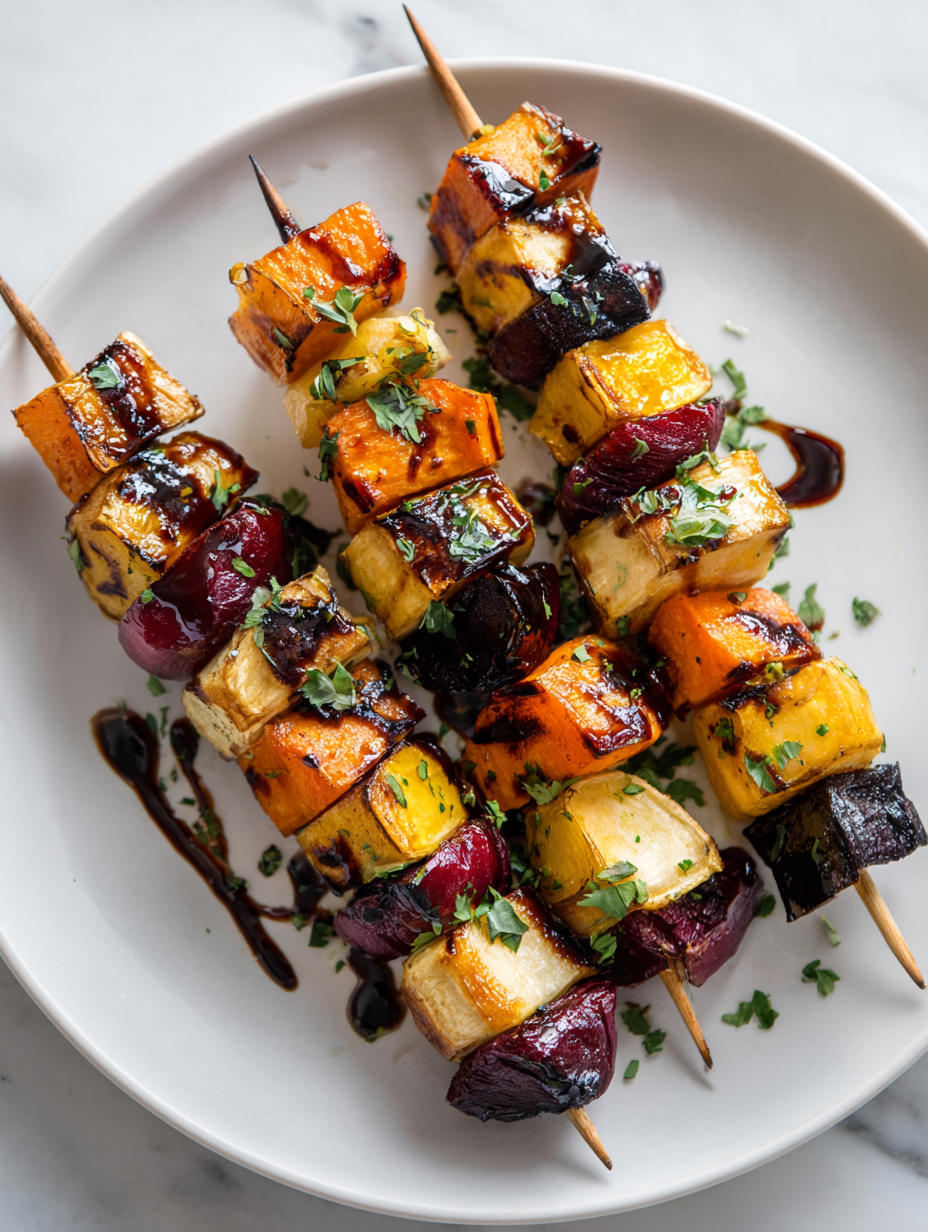
Grilled Seasonal Root Vegetable Skewers
Ingredients
Equipment
Method
- Begin by soaking wooden skewers in water for at least 30 minutes to prevent them from burning during grilling.
- Preheat your grill or grill pan over medium-high heat until hot and slightly smoky, about 200°C (390°F).
- While the grill heats up, prepare your vegetables: cut beets, carrots, and parsnips into roughly 2-inch chunks, keeping sizes uniform for even cooking. Cut the bell pepper into similarly-sized pieces.
- In a small bowl, whisk together minced garlic, olive oil, paprika, cumin, salt, and pepper to create a flavorful marinade.
- Toss the vegetable chunks gently in the marinade until they are well coated. Let them sit for about 10 minutes to absorb the flavors and develop a slight aroma.
- Thread the marinated vegetables onto the soaked skewers, alternating colors and textures for a vibrant, appealing look.
- Place the skewers on the preheated grill, spacing them about 2-3 inches apart. Brush them lightly with additional olive oil for a shiny, crisp surface.
- Grill the skewers for 10-12 minutes, turning occasionally with tongs. You should hear gentle sizzling and see the vegetables develop a slight char and caramelization.
- Check for doneness: the beets and carrots should be tender and smoky, the peppers blistered and soft. Adjust grilling time if needed.
- Once cooked, remove the skewers from the grill and let them rest for a couple of minutes. This helps the juices settle and enhances flavor.
- Serve the skewers hot, garnished with fresh herbs or a squeeze of lemon if desired. Enjoy the smoky, earthy flavors and vibrant textures.
Notes
Pro tips for vegetable kababs
- Bold marinade: Use a generous amount of oil and herbs—this ensures veggies stay moist and flavorful on the grill.
- High heat: Preheat your grill to around 200°C (390°F) for quick, smoky charring that locks in juices.
- Uniform pieces: Cut vegetables into similar sizes—this ensures even cooking and prevents some from drying out while others stay raw.
- Skewer spacing: Leave a slight gap between pieces on skewers—this allows heat to circulate, giving an even char and caramelization.
- Touch of oil: Lightly brush skewers before grilling—this helps prevent sticking and encourages a nice, crispy surface.
- Check readiness: Vegetables should be tender with a slight char—test with a fork or skewer, and listen for crackling sounds during grilling.
- Rest briefly: Let skewers sit for 2 minutes after grilling—this helps juices settle and keeps veggies moist.
Common mistakes and how to fix them
- FORGOT to soak wooden skewers → Soak for 30 mins to prevent burning.
- DUMPED marinade too early → Let vegetables marinate for at least 10 minutes.
- OVER-TORCHED skewers → Reduce grill heat or turn skewers more frequently.
- MISSED resting time → Rest skewers for 2 minutes before serving for juiciness.
Quick fixes and pantry swaps
- When veggies release excess moisture, splash a little more oil to crisp them up.
- If skewers burn quickly, patch with a foil shield or reduce grill heat slightly.
- Dumped marinade too early? Rescue with a quick brush of oil and herbs before grilling again.
- Overcooked veggies turn mushy—remove from heat sooner or lower the flame for better texture.
- Pantry swap: Use smoked paprika instead of regular for a richer, smoky flavor.
Prep, store, and reheat tips
- Prep vegetables: chop beets, carrots, zucchini, and peppers a day in advance; keep refrigerated to maintain freshness and prevent spoilage.
- Assemble skewers ahead of time, but wait to grill until serving for fresh char and optimal texture; store assembled skewers covered in the fridge for up to 24 hours.
- Marinate vegetables overnight for a deeper flavor; store in an airtight container, and bring to room temperature before grilling to ensure even cooking.
- Reheat grilled kababs gently in a warm oven at 160°C (320°F) for 5-7 minutes, or until heated through, until vegetables are tender and smoky aroma returns.
- Leftovers can be stored in the fridge for up to 2 days; reheat until sizzling and fragrant, with slight bubbling around the edges to ensure freshness and flavor.
Top questions about vegetable kababs
1. What vegetables work best for vegetable kababs?
Use seasonal root vegetables like beets and carrots for earthy sweetness and hearty texture. They caramelize beautifully when roasted, adding smoky depth.

2. How do I prevent skewers from burning?
Soak wooden skewers in water for at least 30 minutes to prevent burning. Metal skewers are hassle-free but conduct more heat.
3. What’s the ideal grill temperature and timing?
Roast vegetables at around 200°C (390°F) until they are tender with a slight char, usually 10-12 minutes, turning occasionally.
4. Should I marinate the vegetables before grilling?
Marinate the vegetables for at least 10 minutes to enhance flavor. Longer marinating, like overnight, deepens the taste.
5. How do I fix burning or sticking vegetables?
Adjust the grill heat if veggies are burning or sticking. Use medium-high heat for quick, smoky charring without overcooking.

6. How do I know when the kababs are done?
Vegetables should be smoky, tender, and slightly caramelized with a vibrant color. They should not be mushy or burnt.
7. Can I swap out some vegetables or herbs?
Substitute zucchini with parsnips for a nuttier flavor, or bell peppers with cherry tomatoes for juiciness. Use herbs like parsley if cilantro isn’t available.
8. How should I prepare and cut the vegetables?
Ensure vegetables are cut uniformly for even cooking. Drain excess moisture from zucchini to avoid soggy kababs.
9. How should I serve and finish the kababs?
Serve the kababs immediately after resting for 2 minutes. Garnish with fresh herbs and a squeeze of lemon for brightness.
10. Can I make these ahead and reheat?
Leftover kababs can be stored in the fridge for up to 2 days. Reheat in a warm oven or skillet until fragrant and hot.
Cooking these vegetable kababs reminds me how simple ingredients can shine with a little flame and patience. The smoky aroma and the tender, slightly caramelized bites evoke memories of outdoor gatherings and lazy weekends. It’s a dish that’s honest, unpretentious, and perfect for turning seasonal veggies into something special.
Whenever I make these, I feel a quiet satisfaction in turning humble roots and garden-fresh produce into a meal that’s satisfying and full of character. They’re a reminder that the best flavors often come from just respecting the ingredients and letting them speak. That’s what keeps me coming back to this recipe, season after season.