
Sometimes, I find myself staring at a crisper drawer full of odds and ends—half a zucchini, a stray carrot, bits of onion—and wonder how to turn them into something more than just leftovers. Vegetable fritters became my go-to because they’re forgiving, adaptable, and surprisingly quick to whip up. Plus, that first crispy bite, with a little gooey center, always brings a small victory to an ordinary day.
There’s something satisfying about transforming humble vegetables into golden, crunchy fritters. It’s like giving them a little extra life, a reason to shine on a plate. Whether I’m rushing through a busy week or just craving comfort, these fritters are my answer—an honest, no-fuss way to get a veggie fix without stressing about exact measurements or fancy ingredients.
Focusing on how vegetable fritters can be a forgiving, adaptable dish that transforms leftovers into a crispy, satisfying snack, perfect for those busy days when you need something quick, tasty, and resourceful.
Turning leftovers into crispy treasures
- Finding a way to make vegetables feel exciting again, especially when I thought I’d exhausted all options.
- That first crispy, golden edge always makes me smile, a small reminder of how simple ingredients can surprise you.
- There’s a nostalgic comfort in the familiar sizzle and smell of fritters frying — like a quick trip back to childhood.
- Celebrating the imperfect, the slightly uneven shapes — because that’s where the charm and personality live in these fritters.
- Sharing these with friends and hearing their surprised praise for something so humble reminds me why I love cooking.
Turning leftovers into crispy treasures
- This recipe was born out of a lazy Sunday afternoon, when I was rummaging through the fridge and found a mix of odds and ends—some zucchini, a lonely carrot, half a red onion. Instead of letting them go to waste, I started grating and mixing, aiming for something crispy and satisfying. The moment I fried that first batch and heard the crackle, I knew I’d found a new way to make leftovers feel special.
- Every time I make these fritters, I remember how simple ingredients can turn into something utterly comforting and versatile. It’s a reminder that no vegetable needs to be thrown out if you can just transform it into something crispy. Plus, I love the little chaos of mixing everything up without overthinking—trusting that it’ll turn out just fine.
- heading: Turning odds and ends into crispy bites
Historical snippets about vegetable fritters
- Vegetable fritters have roots in many cuisines, from Jewish latkes to Indian pakoras, each with unique twists.
- Originally, these fritters were a way to stretch scarce ingredients during wartime shortages.
- Ancient civilizations used similar methods, frying mashed vegetables into crispy bites over open flames.
- In some cultures, fritters were considered street food, enjoyed as quick, affordable snacks.
- Today, they’re experiencing a resurgence as a flexible, veggie-packed dish perfect for modern quick bites.
Ingredient breakdown: key components
- Zucchini: I love the high water content that makes the fritters moist and tender—just watch for excess moisture, squeeze out those last droplets before mixing.
- Carrots: Their natural sweetness adds a nice contrast—use a fine grate so they don’t weigh down the batter or make it too dense.
- Onion: I prefer red onion for a milder, slightly sweet flavor, but yellow works too—just chop fine, and the aroma when frying is irresistible.
- Flour: I lean on all-purpose for a reliable crunch, but chickpea flour gives a nuttier flavor and a gluten-free option—adjust the moisture if needed.
- Eggs: They help bind everything together, creating a crispy crust—if you’re vegan, try flaxseed or chia seed mix, but expect a slightly different texture.
- Herbs & Spices: Fresh parsley brightens things up, while a pinch of cumin adds warmth—don’t skip this step, it’s the flavor booster.
- Oil: I prefer neutral oils like vegetable or canola for frying—make sure it’s hot enough to sizzle immediately, around 180°C (356°F).
Spotlight on key ingredients
Zucchini:
- I love how its high water content makes fritters moist and tender—just be sure to squeeze out excess moisture for crispness.
- Carrots: Their natural sweetness and crunch add a lovely contrast—use a fine grate so they blend well without weighing down the batter.
- Its mild flavor and soft texture during frying create the perfect canvas—watch for excess water, squeeze well before mixing.
Onion:
- I prefer red onion for a milder, slightly sweet aroma—sautéing it first can deepen its flavor and reduce raw sharpness.
- It crisps up beautifully, adding a savory crunch—finely chop to distribute evenly and prevent soggy bites.
- Its fragrant aroma when frying signals that you’re close—don’t skip this step for flavor depth.
Notes for ingredient swaps
- Dairy-Free: Swap regular yogurt or sour cream with coconut yogurt for a creamy, tangy finish that’s dairy-free.
- Gluten-Free: Replace all-purpose flour with rice flour or almond flour for a lighter, nutty texture—adjust moisture as needed.
- Vegan: Use flaxseed meal or chia seeds mixed with water instead of eggs; it’ll bind well but may be slightly denser.
- Herb Variations: Fresh basil or dill can replace parsley for a different herbal aroma—use what’s fresh and fragrant.
- Oil Choices: Switch vegetable oil for coconut or avocado oil for a subtle flavor shift and higher smoke point, perfect for frying.
- Add Heat: Mix in a pinch of cayenne or smoked paprika for a smoky kick—start small, taste, then adjust.
- Sweet Touch: Incorporate a teaspoon of honey or maple syrup into the batter for a hint of sweetness that balances the veggies.
Equipment & Tools
- Large mixing bowl: Combine ingredients easily and thoroughly.
- Box grater or food processor: Shred vegetables uniformly for even cooking.
- Non-stick skillet or cast iron pan: Fry fritters evenly with minimal sticking.
- Spatula: Flip and handle fritters during frying.
- Paper towels: Drain excess oil from cooked fritters.
Step-by-step guide to vegetable fritters
- Equipment & Tools: Gather a large mixing bowl for combining ingredients, a box grater or food processor for shredding vegetables, a non-stick skillet or cast iron pan for frying, a spatula for flipping, and paper towels for draining excess oil.
- Prep vegetables. Grate 1 cup zucchini, 1 cup carrot, and ½ cup onion. Use a fine shred for even cooking. Squeeze out excess moisture from zucchini and carrot using a clean dish towel, pressing firmly to avoid soggy fritters.
- Mix batter. In the bowl, combine shredded vegetables, ½ cup flour, 1 beaten egg, 2 tablespoons chopped herbs (parsley or cilantro), a pinch of salt, and a dash of pepper. Stir until just combined. If the mixture feels too wet, add a little more flour; if too dry, a splash of water or another egg.
- Heat oil. Place your skillet over medium heat (about 180°C / 356°F). Add enough neutral oil to coat the bottom. Let it shimmer, but not smoke. Test with a small drop of batter; it should sizzle immediately.
- Form fritters. Scoop about 2 tablespoons of batter per fritter, gently flattening with the back of a spatula. Don’t overcrowd the pan—work in batches if needed.
- Fry. Cook for about 3–4 minutes per side, until golden brown and crispy. Use tongs or a spatula to flip. Adjust heat if browning too fast or slow. Keep an eye on the edges; they should crisp up nicely.
- Drain. Transfer cooked fritters to paper towels to drain excess oil. Repeat with remaining batter, ensuring oil stays hot enough for a crackling sound when adding new fritters.
- Rest & Finish: Let the fritters rest for 2 minutes. Serve hot, garnished with extra herbs or a squeeze of lemon if desired. Pair with a dollop of yogurt or a simple dipping sauce.
- Checkpoints & How to Know It’s Done: The fritters should be golden and crispy on the outside, with a tender interior. They should feel firm when pressed, not soggy or mushy. The aroma should be fragrant and slightly smoky from the frying oil. Ensure internal color is consistent and not raw-looking.
Allow fritters to rest for 2 minutes on a wire rack or paper towels. Serve immediately while still crispy, garnished with herbs or a lemon wedge for brightness.
How to Know It’s Done
- Fritters are golden and crispy on the outside.
- Interior is tender but not raw or mushy.
- Aroma is fragrant with a slight smoky note from frying.
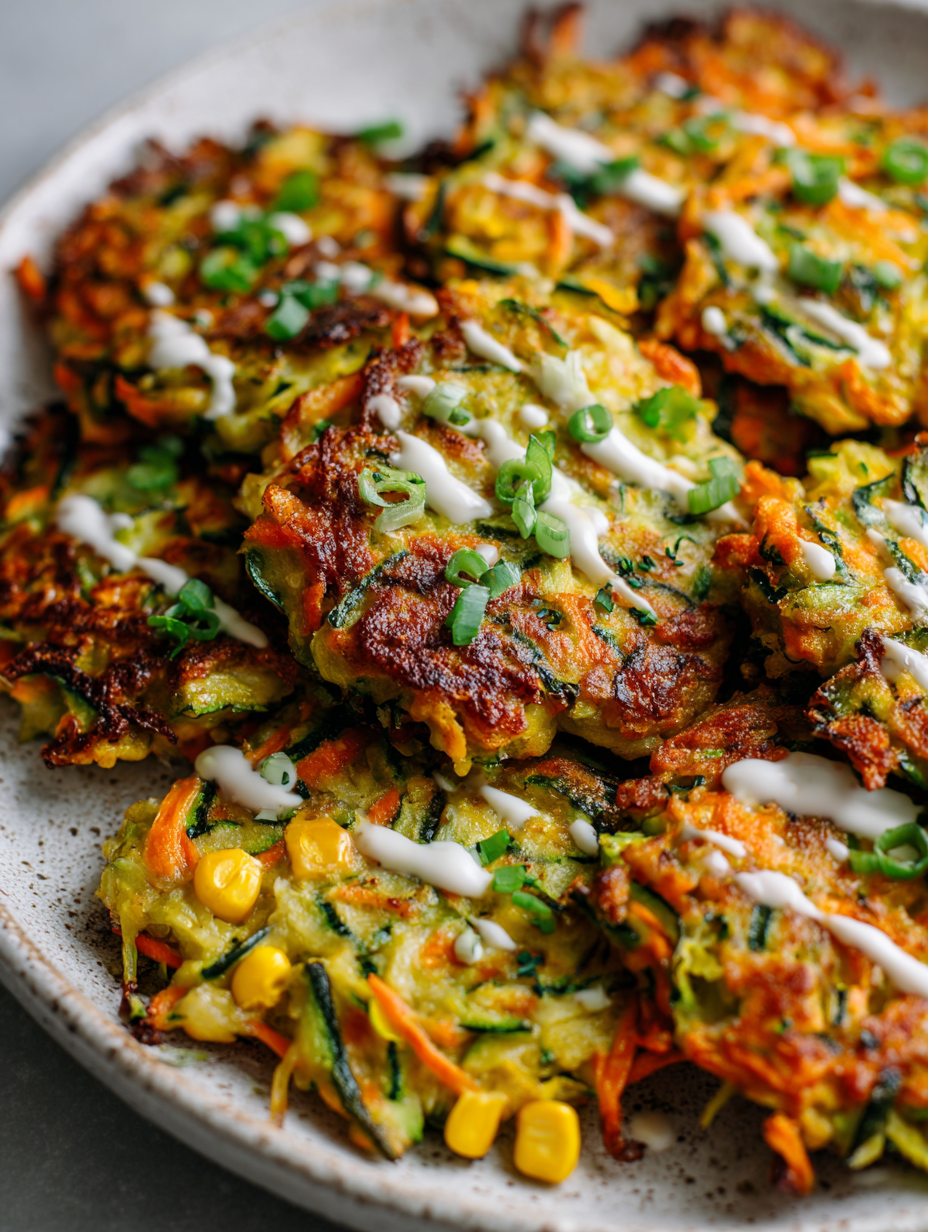
Vegetable Fritters
Ingredients
Equipment
Method
- Start by grating the zucchini and carrot using a box grater or food processor, then transfer them to a clean dish towel and squeeze out as much excess moisture as possible. Finely chop the red onion and set aside.
- In a large mixing bowl, combine the grated zucchini, carrot, chopped onion, flour, beaten egg, chopped parsley, salt, and pepper. Stir everything together until well incorporated; the mixture should be thick and slightly sticky.
- Heat a non-stick skillet or cast iron pan over medium heat and add about 2 tablespoons of neutral oil. Let the oil shimmer and heat until it’s hot enough to sizzle when a small amount of batter touches it.
- Using a spoon or your hands, scoop about 2 tablespoons of the vegetable mixture and gently flatten it into a patty in the skillet. Repeat, leaving space between each fritter.
- Cook the fritters for about 3–4 minutes on each side, until they turn a deep golden brown and develop a crispy exterior. You’ll hear a gentle crackling as they fry, and the aroma will be fragrant and inviting.
- Use tongs or a spatula to flip the fritters carefully and cook the other side until equally golden and crispy.
- Transfer the cooked fritters to a paper towel-lined plate to drain any excess oil. Repeat with the remaining mixture, ensuring the oil stays hot enough for frying.
- Let the fritters rest for a minute to firm up, then serve hot with a squeeze of lemon or a dollop of yogurt if desired. Enjoy their crispy edges and tender centers!
Notes
Pro tips for crispy fritters
- Bolded mini-head: Keep vegetables as dry as possible—excess moisture makes fritters soggy, so squeeze out water thoroughly.
- Bolded mini-head: Use a hot pan—fritters should sizzle immediately to develop a crispy crust and prevent sticking.
- Bolded mini-head: Don’t overcrowd the pan—frying in batches ensures even cooking and crisp edges.
- Bolded mini-head: Flip once when edges are golden—resist the urge to move early to avoid tearing the fritters apart.
- Bolded mini-head: Drain on paper towels—removes excess oil and keeps fritters crisp instead of greasy.
- Bolded mini-head: Rest briefly after frying—this helps set the crust and makes flipping easier.
- Bolded mini-head: Adjust heat as needed—if fritters brown too fast, lower the heat; if they’re pale, turn it up slightly.
Common mistakes and how to fix them
- FORGOT to squeeze excess moisture from vegetables, resulting in soggy fritters.
- DUMPED too much oil in pan, leading to greasy bites—use just enough to coat the bottom.
- OVER-TORCHED the fritters, which caused bitterness—manage heat to golden-brown perfection.
- SKIPPED resting time, making fritters fragile and difficult to flip without breaking.
Quick fixes and pantry swaps
- When fritters are soggy, splash a little more oil and flip again for crispness.
- If batter is too wet, pantry swap: add a spoonful of breadcrumbs or extra flour.
- DUMPED too much oil? Patch with paper towels and start frying on lower heat.
- Over-torched edges? Shield with a lid or lower the heat to stop browning too fast.
- If vegetables release too much water, open the drain and squeeze out excess before mixing.
Prep, store, and reheat tips
- Prep vegetables ahead: Grate zucchini, carrot, and finely chop onion the night before. Keeps them fresh and ready to mix.
- Store in airtight containers in the fridge for up to 24 hours. Vegetables stay crisp and bright, ready for frying.
- Cooked fritters can be kept in the fridge for up to 2 days. Reheat in a hot skillet until crispy and warmed through, about 2–3 minutes per side.
- Fritters reheat best when freshly crisped—avoid microwaving, which softens the crust. Instead, a quick pan reheat restores crunch, with a fragrant sizzle.
- For longer storage, freeze cooked fritters in a single layer on a tray, then transfer to an airtight bag. Reheat from frozen in a hot skillet for crispness.
FAQs about Vegetable Fritters
1. How do I prevent soggy fritters?
Use a fine grater to prevent large chunks, and squeeze out excess moisture to keep fritters crispy.
2. How do I know when the oil is ready?
Make sure your oil is hot enough (around 180°C/356°F) before frying; it helps crisp the outside.
3. What’s the best pan for frying fritters?
Use a non-stick or cast iron skillet for even frying and easy flipping.
4. My batter is too runny, what now?
If the batter feels too wet, add a little more flour; if too dry, a splash of water or an egg helps.
5. Can I fry all fritters at once?
Cook in small batches to avoid overcrowding; this keeps the temperature consistent and fritters crisp.

6. How should I reheat leftover fritters?
Fritters are best served immediately but can be kept warm in a low oven or reheated in a hot skillet.
7. Can I use dried herbs instead of fresh?
Using fresh herbs like parsley or cilantro brightens the flavor, but dried herbs or other greens work too if fresh aren’t available.
8. Can I make these vegan?
For a vegan version, replace eggs with flax or chia seed mixture, but expect a slightly different texture.
9. How can I add more flavor to the batter?
Adding a pinch of cumin or smoked paprika can give the fritters a warm, smoky flavor that’s delightful.
10. How do I know when fritters are done?
Check for a golden-brown color, crispy edges, and a firm but tender interior before removing from oil.
These vegetable fritters are a reminder that simplicity in the kitchen can still deliver a satisfying crunch and a burst of freshness. They’re perfect for sneaking more veggies into busy days or turning leftovers into something special without much fuss.
Every crispy bite echoes a bit of nostalgia—crunchy, fragrant, and just a little imperfect. No matter the occasion, they hold a little bit of that honest, home-cooked charm, making me reach for the skillet again and again.