
Falafel is one of those foods that makes my kitchen smell of warm spices and crispy edges, and I love the way each bite gives that perfect contrast: a crunchy shell giving way to a tender, herby interior. Getting that texture right isn’t just about the ingredients—it’s about technique, timing, and a little patience with the oil. I’ve learned to pay close attention to frying temperature and how the falafel floats, cracks, and turns a deep golden hue.
There’s a quiet satisfaction in mastering the art of frying falafel without splattering oil everywhere or ending up with soggy middles. I keep my oil steady at around 180°C (350°F), and I always test a small piece first—watch for that crackling sound and bright color—that’s my signal to get ready for the batch. It might seem straightforward, but those little nuances make all the difference in achieving that irresistible crispy exterior and moist, herbaceous inside.
Focusing on the texture and bite of falafel, emphasizing the importance of proper frying technique to achieve that perfect crispy exterior and tender interior, while sharing personal tips for avoiding oil splatters and ensuring even cooking.
The texture quest in frying
- Frying falafel always feels like a small dance with oil, a bit chaotic but rewarding when that perfect crackle happens.
- Nothing beats the nostalgic smell of cumin and garlic wafting through my kitchen during falafel fry-ups.
- Getting the texture right—crisp on the outside, moist inside—still feels like a little victory each time.
- Sharing falafel with friends, knowing I made every step from scratch, fills me with quiet pride.
- There’s a calming rhythm in blending the herbs and shaping each ball—like a meditative act in my busy day.
The story behind this recipe
- Growing up, I always loved the smell of falafel frying—those warm spices and the promise of something crispy and herby. I remember my first successful batch: the outside was crackly, the inside soft and fragrant, and I felt like I’d cracked a secret. That moment made me realize how much I love playing with textures and flavors in my own kitchen, even if I mess up a few times first.
- Falafel feels like a small act of rebellion against overly polished, uniform food. It’s about the imperfect, the rustic, and the deeply satisfying process of shaping and frying. Over the years, I’ve tweaked my technique—paying closer attention to oil temp and the consistency of the mixture—to get that perfect bite every time. It’s not just a recipe; it’s a little ritual that reconnects me with simple, honest cooking.
- heading
- The story behind this recipe
Falafel Trivia and Origins
- Falafel’s roots trace back over a thousand years in the Middle East, with varying regional twists in herbs and spices.
- Historically, falafel was a street food for the working class, portable and filling, often eaten on the go with simple bread and pickles.
- Some theories suggest falafel was originally a Egyptian dish, made with fava beans, before chickpeas became the staple in Levantine recipes.
- In Israel, falafel became a national symbol, intertwined with cultural identity and street food scenes, evolving with local flavors.
- The crispy exterior and tender interior are the result of a precise frying technique that balances oil temperature and mixture consistency.
Ingredient breakdown: key components
- Chickpeas: I use canned chickpeas for convenience, but I find soaking dried ones overnight gives a firmer, more resilient texture that holds up well during frying. You want that slight chewiness with a nutty flavor lingering.
- Herbs (parsley & cilantro): Fresh herbs brighten up the falafel and add that vibrant green contrast. I pulse them just briefly in the food processor—enough to chop, not pureé—to keep a bit of that fresh, leafy texture.
- Onion & garlic: These aromatics are essential for flavor, but I keep the onion finely minced and garlic roasted beforehand when I want a mellower, sweeter note. Raw adds punch, but roasted gives a subtle depth.
- Spices (cumin, coriander): Toasted cumin seeds give a smoky aroma that’s irresistible. I prefer grinding them fresh, which releases the oils and makes the flavor pop—don’t skip this step if you can.
- Binding agents (flour & baking soda): I stick with chickpea flour for authenticity and texture, but a little baking soda helps lighten the mixture. If it feels too sticky, a touch more flour firms it up without losing tenderness.
- Oil for frying: I opt for a neutral oil with a high smoke point, like vegetable or sunflower. Keep it steady at around 180°C (350°F)—that crackling sound is my cue to flip and turn, ensuring even crispiness.
- Lemon juice: Just a squeeze brightens the whole falafel, making the herbs and spices sing. I add it after frying, so it keeps that fresh, zingy punch without losing its bite.
Spotlight on key ingredients
Chickpeas:
- I use canned chickpeas for convenience, but soaking dried ones overnight gives a firmer, more resilient texture that holds up well during frying. You want that slight chewiness with a nutty flavor lingering.
- Herbs (parsley & cilantro): Fresh herbs brighten up the falafel and add that vibrant green contrast. I pulse them just briefly in the food processor—enough to chop, not pureé—to keep a bit of that fresh, leafy texture.
Herbs & Citrus:
- Fresh herbs: I prefer using freshly chopped parsley and cilantro for vibrant flavor and bright green color. Dried herbs won’t give the same fresh punch, so consider adding a little more dried if fresh isn’t available.
- Lemon juice: Brightens everything and adds freshness. If you don’t have lemon, a splash of lime juice works similarly—just adjust for acidity and flavor balance.
Notes for ingredient swaps
- Fresh Herbs: I prefer using freshly chopped parsley and cilantro for vibrant flavor and bright green color. Dried herbs won’t give the same fresh punch, so consider adding a little more dried if fresh isn’t available.
- Chickpeas: Canned chickpeas are my go-to for convenience, but soaking dried chickpeas overnight yields a firmer, more resilient falafel with a nuttier flavor. If using dried, ensure they’re fully cooked and dried before processing.
- Flour: Chickpea flour is traditional and adds that slightly nutty taste, but if you’re gluten-free, try oat flour or almond flour. They’ll change the texture slightly but keep the falafel tender and binding well.
- Oil for Frying: Neutral oils like vegetable or sunflower are best for high heat, but if you want a little extra flavor, sesame oil works—just use it sparingly as it’s quite potent. Keep oil steady at 180°C (350°F) for crisp results.
- Spices: Toasted cumin seeds give that smoky aroma, but ground cumin from the jar works fine if you’re in a pinch. Adjust to taste, and consider adding a pinch of smoked paprika for depth.
- Onion: Raw onion gives a sharp, fresh bite, but roasted onion adds a mellow sweetness. Use whichever suits your flavor preference, just chop finely for even mixing.
- Lemon Juice: Brightens everything and adds freshness. If you don’t have lemon, a splash of lime juice works similarly—just adjust for acidity and flavor balance.
Equipment & Tools
- Food processor: To coarsely grind chickpeas and chop herbs quickly.
- Deep frying pan or skillet: For even heat distribution and proper frying.
- Thermometer: To monitor oil temperature accurately.
- Slotted spoon: To carefully lift falafel from hot oil and drain excess oil.
- Paper towels: To absorb excess oil from fried falafel.
Step-by-step guide to frying falafel
- Gather all ingredients: drained canned chickpeas, fresh parsley, cilantro, onion, garlic, spices, flour, and oil. Prepare your tools: food processor, mixing bowls, frying pan, slotted spoon, and thermometer.
- In the food processor, pulse the chickpeas until coarsely ground—avoid pureeing. Transfer to a bowl. Finely chop the herbs and onion, then add to the chickpeas.
- Add minced garlic, toasted cumin, ground coriander, a pinch of salt, and a teaspoon of baking soda. Mix well. Stir in chickpea flour gradually until the mixture holds together but isn’t sticky—test by forming a small ball.
- Heat oil in a deep pan or skillet to 180°C (350°F). Use a thermometer to maintain steady heat. While heating, shape the falafel mixture into small balls or patties, about 1-1.5 inches diameter.
- Test the oil with a small piece of mixture; it should sizzle immediately and turn golden in 30 seconds. If too smoky or not crackling, adjust heat slightly.
- Carefully slide a few falafel balls into the hot oil, frying in batches. Cook for about 3-4 minutes, turning occasionally. Watch for a deep golden crust and a crackling sound during frying.
- Once golden and crisp, remove with a slotted spoon and drain on paper towels. Check one for doneness—interior should be tender and not raw.
- Allow falafel to rest for a minute. Serve hot with lemon wedges and your favorite dips or in pita with fresh toppings.
Let the falafel rest briefly on paper towels. Serve immediately for maximum crispness, garnished with lemon wedges and herbs. If not eating right away, keep warm in a low oven (around 90°C/200°F).
How to Know It’s Done
- Falafel turns deep golden and crackles during frying.
- Interior feels firm but moist when pressed gently.
- Oil temperature stays steady at 180°C (350°F) without smoking excessively.
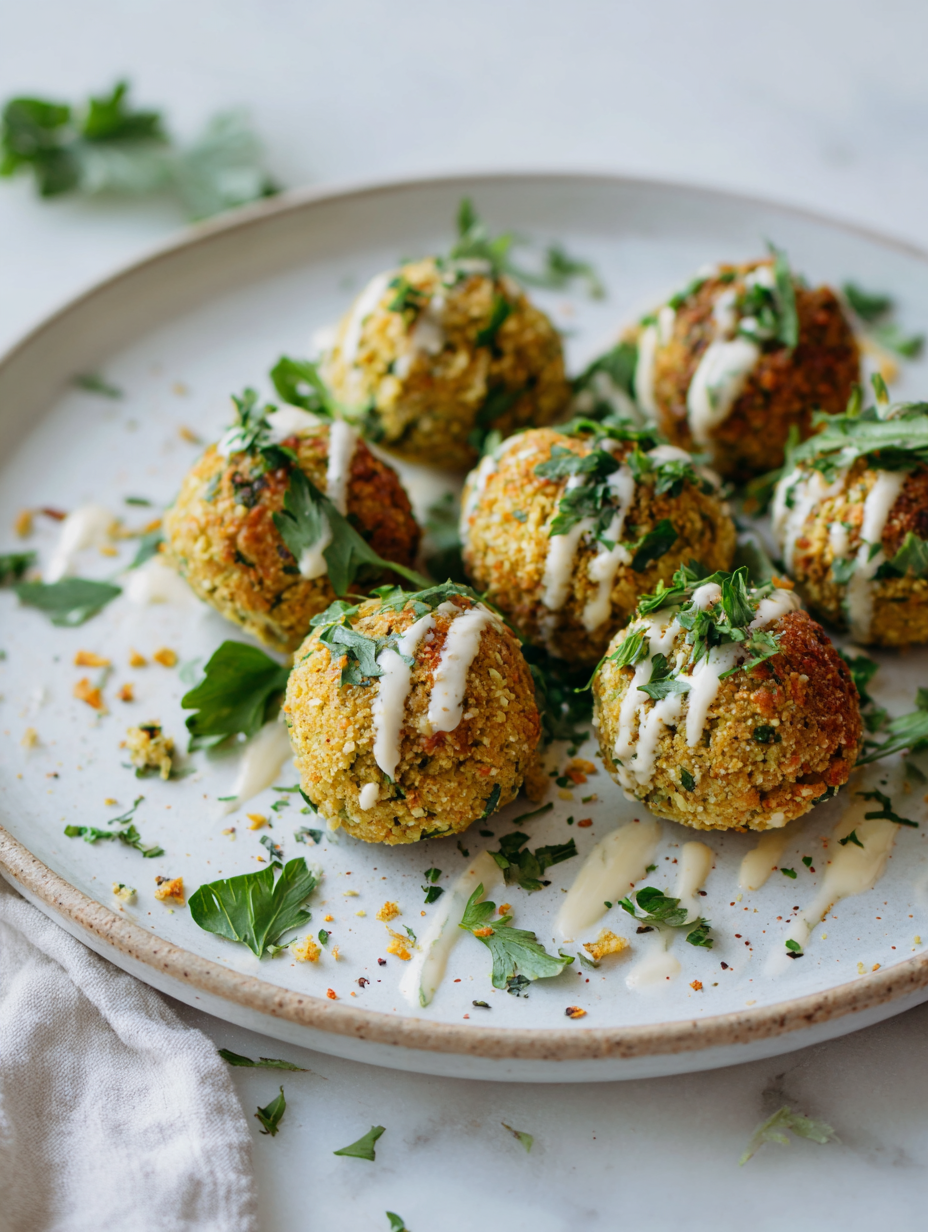
Crispy Homemade Falafel
Ingredients
Equipment
Method
- Place chickpeas in a food processor and pulse until coarsely ground, avoiding pureeing; the mixture should be slightly chunky.
- Transfer the chickpeas to a mixing bowl and add finely chopped onion, minced garlic, chopped herbs, toasted cumin, ground coriander, and baking soda.
- Gradually stir in chickpea flour, a little at a time, until the mixture holds together when pressed but isn’t sticky; this helps form firm balls.
- Cover and chill the mixture for at least 30 minutes—this relaxes the dough and helps it hold shape.
- Heat oil in a deep pan or skillet to 180°C (350°F), using a thermometer to maintain consistent temperature.
- Shape the chilled mixture into small balls or patties, about 1 to 1.5 inches diameter, keeping hands damp to prevent sticking.
- Carefully slide a few shaped falafel into the hot oil, listening for a lively crackle, and fry until deep golden brown, about 3-4 minutes, turning occasionally.
- Use a slotted spoon to remove the falafel and drain on paper towels; the exterior should be crisp and crackling, with a moist interior.
- Squeeze fresh lemon juice over the hot falafel and serve immediately with dips or in pita bread for a delicious meal.
Pro tips for perfect falafel
- Bolded Mini-Head: Use a thermometer to keep oil steady at 180°C (350°F) for even crispiness.
- Bolded Mini-Head: Chill the mixture for at least 30 minutes—this helps it hold shape during frying.
- Bolded Mini-Head: When shaping falafel, keep your hands damp to prevent sticking and ensure uniform balls.
- Bolded Mini-Head: Fry in small batches—crowding drops the oil temperature and results in soggy falafel.
- Bolded Mini-Head: For extra crunch, add a teaspoon of rice flour to your falafel mixture before frying.
- Bolded Mini-Head: Rest cooked falafel on a wire rack instead of paper towels—keeps them crisp longer.
- Bolded Mini-Head: If oil splatters, splash a little water on the surface to calm the bubbling—be cautious!
Common mistakes and how to fix them
- FORGOT to maintain oil temperature → Oil cools down, falafel absorbs oil, becomes greasy.
- DUMPED mixture too wet → Add more flour gradually until mixture holds shape without sticking.
- OVER-TORCHED oil → Reduce heat slightly; too dark oil imparts bitter, burnt flavor.
- MISSHAPED falafel → Keep hands damp; prevents sticking and helps shape evenly.
Quick fixes and pantry swaps
- When oil shimmers and crackles, your falafel is ready to turn—don’t rush the process.
- Splash a little water if oil splatters too aggressively—calms the bubbling and prevents burns.
- Patch soggy falafel by adding a pinch more flour or chickpea flour—helps crisp without drying out.
- Shield delicate falafel with a slotted spoon if oil temperature drops—maintain that perfect crispy exterior.
- If mixture feels too wet, open your pantry swap: add a spoonful of rice or tapioca flour for better binding and crunch.
Prep, store, and reheat tips
- Prep the falafel mixture up to a day in advance; keep covered in the fridge to meld flavors and improve texture. The herbs and spices develop a deeper brightness overnight.
- Shape the falafel balls ahead of time, then refrigerate on a tray lined with parchment—this firms them up and makes frying easier. They’ll stay good for up to 24 hours without losing freshness.
- Store cooked falafel in an airtight container in the fridge for up to 3 days. Reheat in a hot oven (around 180°C/350°F) until crispy, about 8-10 minutes, to revive that satisfying crunch and warm interior.
- Frozen falafel can be kept for up to 1 month. Freeze on a tray first, then transfer to a bag. To reheat, bake directly from frozen for 12-15 minutes, watching for that crispy exterior and fragrant herbs.
Top questions about falafel
1. Can I use dried chickpeas instead of canned?
Use canned chickpeas for convenience, but soaked dried ones give a firmer, nuttier texture that holds better during frying.
2. Can I substitute dried chickpeas?
Yes, but soak dried chickpeas overnight and make sure they’re fully dried before blending to avoid sogginess.
3. Can I use dried herbs in the falafel?
Fresh herbs like parsley and cilantro give a vibrant flavor and color. Dried herbs won’t be as bright and should be used sparingly.
4. Should I add lemon before or after frying?
Adding lemon juice after frying keeps the zest and brightness intact. You can also serve with a squeeze of lime for a different tang.
5. How hot should the oil be for frying?
Maintain oil at around 180°C (350°F). Too hot and they burn; too cool and they become greasy and soggy.
6. How big should the falafel be?
Shape the mixture into small balls or patties, about 1-1.5 inches, making sure they’re compact but not too dense.
7. How many falafel can I fry at once?
Fry in small batches to keep the oil temperature steady. Overcrowding causes sogginess and uneven cooking.
8. How do I know when falafel is cooked?
Falafel is done when it’s deep golden, crackles during frying, and the interior feels moist but firm when pressed.
9. How do I store and reheat leftover falafel?
Store cooked falafel in an airtight container in the fridge for up to 3 days. Reheat in a 180°C (350°F) oven until crisp, about 8-10 minutes.
10. How do I prevent oil splattering?
If oil splatters too much, splash a little water on the surface to calm it down. Always keep a lid nearby for safety.
Frying falafel always leaves my kitchen smelling of warm spices and crackling oil, a kind of messy ritual I look forward to. Each batch reminds me that good texture is about patience and attention, not just ingredients. When I bite into that crispy shell, still hot and fragrant, I feel that quiet satisfaction of a job well done.
In the end, falafel isn’t just about the crunch or herbs—it’s about the small, imperfect moments of bringing something homemade to life. Whether shared with friends or enjoyed on my own, it’s a humble dish that reconnects me to simple, honest cooking. And honestly, that’s what keeps me coming back to the stove.