
There’s something quietly satisfying about making vegetable spring rolls that aren’t just pretty but feel right in your hand, every bite offering a crunch and freshness that’s often overlooked in quick snack recipes. It’s a small act of balance, really—finding that harmony between crisp veggies and a gentle, tender wrapper. I’ve always loved that moment when you get everything wrapped just right, the edges sealing in the vibrant colors and textures.
This recipe isn’t about fancy ingredients or complicated techniques. It’s about celebrating the simplicity of fresh vegetables—crisp cucumbers, sweet bell peppers, and crunchy carrots—wrapped in rice paper that softens perfectly without turning to mush. I tend to make these when I want something light but still satisfying, especially on a warm afternoon or during a busy week when quick, wholesome bites are the best kind of comfort. It’s a reminder that sometimes, the simplest foods carry the most joy.
Focusing on the overlooked art of balancing fresh, crisp vegetables with just the right amount of filling, making each bite a harmony of textures rather than just a quick snack.
The overlooked art of balance
- Making these spring rolls feels like a quiet act of care, especially when I see the vibrant colors come together.
- I love the crunch of fresh vegetables—each bite is a reminder that simple, honest food is often the most satisfying.
- There’s a nostalgic rush when I wrap these, recalling warm afternoons spent with family in the kitchen.
- Sometimes, I’m proud of how these humble rolls brighten a table, no fancy ingredients needed.
- In chaos or calm, these spring rolls are my go-to for a quick, wholesome moment that grounds me.
The story behind this recipe
- Making vegetable spring rolls always takes me back to summer afternoons spent at my grandmother’s house. She’d set out a big platter of fresh, colorful veggies and rice paper, and we’d sit on her porch, wrapping and chatting. Those moments weren’t just about the food—they were about slowing down, savoring the freshness, and sharing stories over something so simple yet so satisfying.
- This recipe came from that memory—an attempt to recreate that feeling of effortless freshness and joy. It’s not about perfection, but about the small pleasure of assembling something vibrant and crunchy, with ingredients that speak for themselves. I love how each roll feels like a tiny, portable celebration of summer, even in the middle of winter.
- heading: The story behind this recipe
Contextual origin, trivia, or history
- Vegetable spring rolls have roots in Southeast Asian cuisine, particularly Vietnam, where they are known as ‘gỏi cuốn’.
- Originally, these rolls were a way to preserve fresh vegetables and herbs, making them portable for busy farmers and traders.
- The use of rice paper as a wrapper dates back centuries, offering a delicate yet sturdy vessel for fresh fillings.
- In recent decades, these rolls have gained worldwide popularity, often adapted with local ingredients and flavors.
- Their vibrant appearance and crisp texture make them a visual and sensory celebration of freshness.
Ingredient breakdown
- Rice paper: I love how its delicate, translucent appearance hides the crunchy veggies inside—so satisfying to bite through. If it’s too dry, dip it in warm water for a few seconds until soft and pliable.
- Cucumbers: I prefer seedless cucumbers—they stay crisp longer and don’t leak water. Slice thinly; the cool, refreshing crunch brightens each bite, especially when paired with fresh herbs.
- Carrots: I use julienned, crunchy carrots for a sweet, vibrant pop—if they’re too thick, the roll feels bulky. Freshly grated adds more juiciness and sweetness.
- Bell peppers: I like using red or yellow for color, their juicy sweetness is a nice contrast. If they’re too thick, remove seeds and slice thin; otherwise, they overpower delicate wraps.
- Fresh herbs: Mint and cilantro are my go-tos—they add an aromatic, cooling note. If you’re not into herbs, a sprinkle of chopped scallions works too, but it won’t have the same brightness.
- Dipping sauce: I prefer a spicy peanut or tangy hoisin—warm, well-mixed sauces make the whole roll more inviting. If it thickens, stir in a splash of warm water or lime juice for that oozy, zingy finish.
Spotlight on key ingredients
Rice paper:
- I love how its delicate, translucent appearance hides the crunchy veggies inside—so satisfying to bite through. If it’s too dry, dip it in warm water for a few seconds until soft and pliable.
- Cucumbers: I prefer seedless cucumbers—they stay crisp longer and don’t leak water. Slice thinly; the cool, refreshing crunch brightens each bite, especially when paired with fresh herbs.
Fresh herbs:
- Carrots: I use julienned, crunchy carrots for a sweet, vibrant pop—if they’re too thick, the roll feels bulky. Freshly grated adds more juiciness and sweetness.
- Mint and cilantro are my go-tos—they add an aromatic, cooling note. If you’re not into herbs, a sprinkle of chopped scallions works too, but it won’t have the same brightness.
Notes for ingredient swaps
- Dairy-Free: Use coconut aminos instead of soy sauce for a salty, slightly sweet flavor without dairy or soy. It’s a good swap if you’re sensitive or want a milder aroma.
- Gluten-Free: Rice vinegar can be replaced with apple cider vinegar for a slightly sweeter, fruitier tang that still brightens the filling.
- Vegan: Skip the fish sauce in the dipping sauce; substitute with a mix of soy sauce and a dash of lime for that umami punch without animal products.
- Crunch: If you don’t have carrots, shredded jicama or daikon radish adds crunch and a subtle sweetness that mimics the texture nicely.
- Herbs: Fresh basil or Thai basil can replace mint or cilantro, offering a different aromatic punch that still lifts the filling’s brightness.
- Wrapper: If rice paper isn’t available, thin rice or soybean sheets work as an alternative, though they may be slightly thicker and less transparent.
Equipment & Tools
- Large shallow bowl: To soften rice paper without tearing
- Sharp knife: For julienning vegetables and slicing herbs
- Damp kitchen towel: To prevent rice paper from sticking and to help with rolling
- Cutting board: A clean surface for prepping vegetables and herbs
Step-by-step guide to spring rolls
- Equip your workspace with a clean, damp kitchen towel, a large shallow bowl of warm water (about 30°C/86°F), a sharp knife, and a clean cutting board. Keep everything within arm’s reach.
- Prepare the vegetables first: Julienne cucumbers, carrots, and thinly slice bell peppers. Keep them separate for easy assembly. Have fresh herbs ready—mint and cilantro, roughly chopped.
- Fill the large bowl with warm water. Submerge one rice paper wrapper for about 10-15 seconds until it softens and becomes pliable. If it sticks, gently wiggle it free; if it tears, discard and try again.
- Lay the softened rice paper flat on the damp towel. Place a small handful of vegetables near the bottom third of the wrapper. Add a few leaves of herbs on top.
- Fold the sides over the filling, then gently roll from bottom to top, pressing lightly to seal. If the wrapper feels too dry or cracks, dip it briefly again. Keep the sealed roll on the damp towel while you assemble the rest.
- Repeat steps 3-5 until all vegetables are wrapped. Don’t overcrowd the rolls; leave about 2-3 cm of space at the top of each wrapper.
- To finish, cut each roll in half diagonally if desired, revealing the vibrant layers inside. Serve immediately with your choice of dipping sauce. Rest the plated rolls for 5 minutes to set, then enjoy fresh.
Arrange completed rolls on a platter. Let them rest for 5 minutes to settle. Serve with dipping sauces like hoisin, peanut, or a splash of lime for added brightness.
How to Know It’s Done
- Wrapper is translucent and slightly sticky, not torn or brittle.
- Vegetables inside are crisp, with no excess water leaking out.
- Sealed edges hold together when gently pressed, no unwrapping during handling.
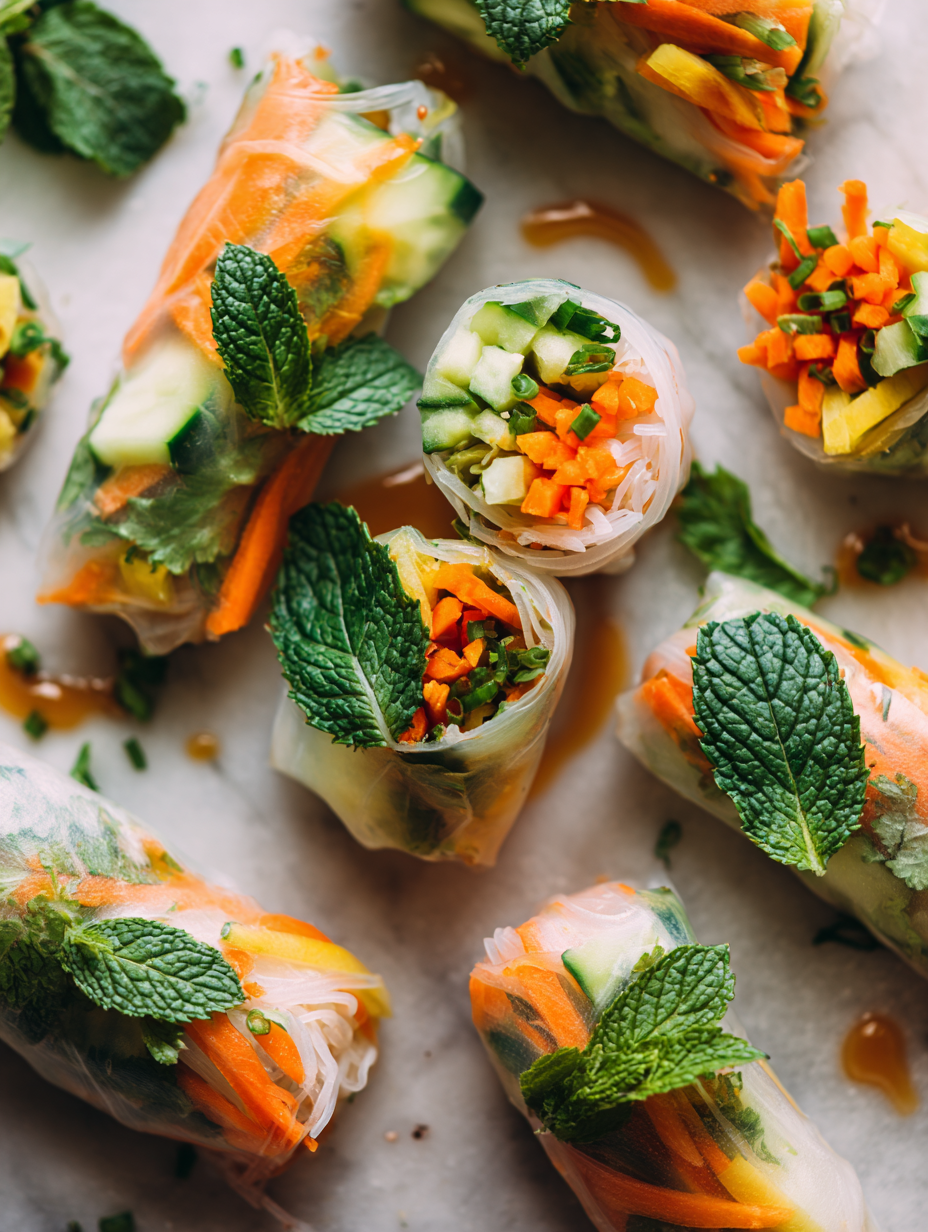
Vegetable Spring Rolls
Ingredients
Equipment
Method
- Prepare your workspace by setting out a large shallow bowl of warm water, a damp kitchen towel, and your prepped vegetables and herbs. Have your rice papers ready for quick use.
- Dip a rice paper wrapper into the warm water for about 10-15 seconds until it becomes soft and pliable. Gently wiggle it to encourage full softening without tearing.
- Lay the softened rice paper flat on the damp towel, smoothing out any wrinkles while keeping it moist and flexible.
- Place a small handful of julienned cucumber, carrots, and bell pepper near the bottom third of the wrapper. Add a few leaves of mint and cilantro on top of the vegetables.
- Fold the sides of the rice paper inward over the filling, then roll from the bottom edge upward tightly to seal in the ingredients. Gently press to ensure the edges stick together.
- Repeat the dipping and filling process with the remaining wrappers and vegetables, working one at a time to keep everything fresh and intact.
- Once all the spring rolls are assembled, cut them in half diagonally if you like a prettier presentation, revealing the colorful layers inside.
- Arrange the finished rolls on a serving platter and serve immediately with your favorite dipping sauce, such as peanut or hoisin.
Top tips for perfect spring rolls
- Dampen the rice paper: Dip quickly in warm water until just pliable—avoid over-soaking to prevent tearing.
- Use crisp, julienned vegetables: Thin strips of carrots and cucumbers stay crunchy and distribute evenly in each bite.
- Seal edges thoroughly: Fold tightly and press lightly with a damp finger to keep the filling secure during handling.
- Don’t overfill: Small handfuls of veggies prevent tearing and make rolling easier without excess bulk.
- Serve immediately: These rolls are best enjoyed fresh; if needed, cover with a damp towel to keep the wrappers moist.
- Adjust for dryness: If wrappers feel stiff, dip briefly again; if too sticky, let them rest a moment before rolling.
Common mistakes and how to fix them
- FORGOT to keep rice paper damp; it tears—spritz with water before wrapping.
- DUMPED filling in center; too much causes tearing—use small, even amounts.
- OVER-TORCHED the wrapper; it turns brown and stiff—remove immediately when translucent.
- MISSED sealing edges; rolls fall apart—press gently and seal with moisture.
Quick fixes and pantry swaps
- When rice paper tears, splash it with warm water and gently patch the rip.
- If filling spills out, dump and start over with less for neater rolls.
- Over-torched wrappers turn brown—shield from direct heat and remove promptly.
- Forgot to seal edges? Dampen your finger and press gently to secure.
- When rolls are too stiff, dip briefly in warm water to soften before wrapping again.
Prep, store, and reheat tips
- Prep vegetables like julienned carrots, sliced cucumbers, and herbs a day ahead; keep them in airtight containers in the fridge to maintain crispness and freshness.
- Soften rice paper just before assembly; store dampened wrappers wrapped in plastic wrap for up to 2 hours without losing flexibility.
- Assembled rolls are best enjoyed the same day, but can be refrigerated for up to 4 hours—cover with a damp towel to prevent drying out.
- Refrigerate leftovers in an airtight container for no more than 24 hours; the vegetables may lose some crunch, and wrappers could become less pliable.
- Reheating isn’t typical, but if you want to refresh, briefly dip in warm water and serve immediately—expect softer texture and less crunch.
Top questions about spring rolls
1. How long should I soak rice paper?
Soaking rice paper just right is key—about 10-15 seconds in warm water until pliable. Too long, and it gets mushy; too short, and it tears easily.

2. Can I prepare spring rolls in advance?
Yes, you can fill the rolls ahead of time, but keep them covered with a damp cloth and enjoy within 4 hours for best crunch.
3. What vegetables work best for filling?
Use crisp, julienned vegetables like carrots and cucumbers. If they’re too thick, the rolls feel bulky and less delicate.
4. How do I keep the rolls from falling apart?
Seal the edges well with a damp finger or a little water to prevent filling from escaping during rolling.
5. How long do spring rolls stay fresh?
Serve immediately for maximum crunch and freshness. If needed, cover with a damp towel and eat within 2-3 hours.
6. What if the rice paper tears?
If rice paper tears during wrapping, dip it again quickly in warm water and patch the tear with your finger.
7. Can I add other ingredients like fruits?
For extra flavor, try adding thin slices of mango or avocado for a sweet contrast, but keep fillings light and crisp.
8. What herbs are best for filling?
Use fresh herbs like mint and cilantro—they add aromatic brightness and contrast beautifully with the crunchy vegetables.
9. How do I soften stiff wrappers?
If the wrappers feel too stiff, dip briefly in warm water to soften before wrapping to prevent cracking.

10. How should I store leftover spring rolls?
When storing leftovers, keep them in an airtight container, covered with a damp cloth, and consume within a day for best texture.
These spring rolls are more than just a snack; they’re a reminder to keep things simple and fresh. On busy days, they offer a moment of calm and a burst of bright flavors. Plus, they look pretty enough to make you smile before the first bite.
In the end, it’s about enjoying the process—layering textures, balancing flavors, and savoring that crisp bite. They’re perfect for sharing or just for yourself when you need a quick, honest refresh. No matter the occasion, they’ll always bring a little bit of summer to the table.