
Making onion bhajis at home isn’t about perfection; it’s about embracing the chaos and the smells that fill your kitchen. The way sliced onions release a sweet, pungent aroma as they mingle with spices and batter is oddly comforting, like a secret only you know. It’s a messy process—batter splatters, onions squish through fingers—but that’s part of the charm.
There’s a nostalgic joy in frying these golden, crispy bites, especially when they crackle and shimmer in hot oil. Each batch turns out a little different—sometimes a little thicker, sometimes more fragrant—yet each one feels like a small victory. It’s honest, imperfect cooking that reminds me why I fell for these spicy, oniony snacks in the first place.
Focusing on the nostalgic warmth and chaotic joy of making onion bhajis at home, capturing the messy, fragrant process that turns simple ingredients into a comforting, imperfectly perfect snack.
Embracing the chaos of frying
- I love how the smell of frying onions immediately fills the kitchen with nostalgia and chaos, like a messy celebration.
- There’s a quiet pride in watching these crispy bites turn golden—like tiny, imperfect trophies of home cooking.
- Frying onion bhajis reminds me of lazy weekends in India, where every bite is a burst of spicy, sweet memories.
The story behind this recipe
- Frying onion bhajis at home takes me back to childhood afternoons in my grandma’s kitchen. The air thick with the scent of cumin and frying onions, it’s a mess I loved to get lost in. Those moments of sticky batter on my fingers, eager to see if they’d turn out crisp, made me feel connected to a simple, soulful tradition.
- Now, I crank up the stove and toss in the onions with a bit of reckless abandon, embracing the chaos. Each batch is a little different—sometimes more fragrant, sometimes thicker—but they always remind me why I keep coming back to this messy, fragrant comfort food.
- heading
- story_type
Trivia and Cultural Roots
- Onion bhajis have roots in Indian snack culture, likely influenced by Persian and Middle Eastern fritters brought through trade routes.
- The crispy, spiced snack became a street food staple in Britain during the colonial era, adapting with local ingredients.
- In the UK, onion bhajis gained popularity in Indian restaurants post-1950s, often served as starters or pub snacks.
Key Ingredients Breakdown
- Onions: I prefer yellow onions—they turn sweet and golden when fried, filling the kitchen with a smoky aroma. Swap for red onions if you want a milder, sharper bite.
- Chickpea flour: It creates that crispy, golden exterior I love. If you’re gluten-free, rice flour can work, but it won’t be as hearty or fragrant.
- Spices (cumin, turmeric, chili): I like to toast the cumin seeds first for a nutty aroma that hits your nose. Skip or reduce chili if you prefer milder bites.
- Water: Just enough to turn the batter into a thick, scoopable paste. Too much makes it runny; too little, and it’s hard to coat the onions evenly.
- Oil for frying: I use vegetable or sunflower oil for a clean, neutral flavor and high smoke point. If you want a healthier version, try air-frying, but it loses that crackly crunch.
- Salt: I don’t shy away—salt enhances everything. Taste the batter before frying to get the seasoning just right, especially if your onions are sweet or mild.
- Baking soda (optional): A pinch helps puff the bhajis slightly, giving a lighter texture. Be cautious—too much can make them airy and fragile.
Spotlight on key ingredients
Onions:
- I love yellow onions—they turn sweet and golden when fried, filling the kitchen with a smoky aroma. Swap for red onions if you want a milder, sharper bite.
- Chickpea flour: It creates that crispy, golden exterior I love. If you’re gluten-free, rice flour can work, but it won’t be as hearty or fragrant.
- Spices (cumin, turmeric, chili): I like to toast the cumin seeds first for a nutty aroma that hits your nose. Skip or reduce chili if you prefer milder bites.
Oil and leavening agents:
- Oil for frying: I use vegetable or sunflower oil for a clean, neutral flavor and high smoke point. If you want a healthier version, try air-frying, but it loses that crackly crunch.
- Baking soda (optional): A pinch helps puff the bhajis slightly, giving a lighter texture. Be cautious—too much can make them airy and fragile.
Notes for ingredient swaps
- Onions: I prefer yellow onions—they turn sweet and golden when fried, filling the kitchen with a smoky aroma. Swap for red onions if you want a milder, sharper bite.
- Chickpea flour: It creates that crispy, golden exterior I love. If you’re gluten-free, rice flour can work, but it won’t be as hearty or fragrant.
- Spices (cumin, turmeric, chili): I like to toast the cumin seeds first for a nutty aroma that hits your nose. Skip or reduce chili if you prefer milder bites.
- Water: Just enough to turn the batter into a thick, scoopable paste. Too much makes it runny; too little, and it’s hard to coat the onions evenly.
- Oil for frying: I use vegetable or sunflower oil for a clean, neutral flavor and high smoke point. If you want a healthier version, try air-frying, but it loses that crackly crunch.
- Salt: I don’t shy away—salt enhances everything. Taste the batter before frying to get the seasoning just right, especially if your onions are sweet or mild.
- Baking soda (optional): A pinch helps puff the bhajis slightly, giving a lighter texture. Be cautious—too much can make them airy and fragile.
Equipment & Tools
- Deep-fry thermometer: To monitor oil temperature accurately during frying.
- Heavy-bottomed pan or wok: Provides even heat distribution for consistent frying.
- Slotted spoon: To lift out and drain excess oil from fried bhajis.
- Paper towels: Absorbs excess oil and keeps bhajis crispy.
Step-by-step guide to onion bhajis
- Gather your equipment: a deep-fry thermometer, a large heavy-bottomed pan or wok, a slotted spoon, and a plate lined with paper towels. The thermometer helps keep the oil at the right temp, the pan provides enough oil to submerge the bhajis, and the slotted spoon makes removing them easy.
- Peel and thinly slice one large onion into half-moons about 2-3mm thick. Keep the slices uniform for even frying.
- In a mixing bowl, combine 1 cup chickpea flour, 1 teaspoon cumin seeds, 1/2 teaspoon turmeric, 1/2 teaspoon chili powder, and a generous pinch of salt. Mix well.
- Add the sliced onions to the dry mixture. Toss to coat thoroughly—this helps the batter stick better and prevents clumping.
- Gradually add 1/4 cup water, stirring as you go. The batter should be thick but scoopable—like a dense pudding. If it’s too runny, sprinkle in a bit more chickpea flour.
- Heat about 2 inches of oil in the pan over medium heat (around 170°C/340°F). Use the thermometer to check the temperature. It should shimmer and give off a faint crackle when ready.
- Using a tablespoon or your hands, scoop a heaping spoonful of batter. Gently shape it into a small patty or loosely drop it into the hot oil. Do not overcrowd the pan—about 4-5 at a time.
- Fry for 3-4 minutes, turning occasionally. The bhajis should turn a deep golden brown and emit a crackling sound. Adjust heat if they brown too fast or too slow.
- When crispy and golden, remove with a slotted spoon. Drain on paper towels. Repeat with remaining batter, keeping the oil at temperature.
- Let the bhajis rest briefly—just a minute—so they crisp up further. Serve hot, with chutney or yogurt if desired.
- Check for doneness: the exterior should be crispy, the interior soft and fragrant, and the oil clear from residue.
Let the bhajis rest on a paper-lined plate for a minute. Serve immediately while hot and crispy. Pair with chutney or yogurt for contrast.
How to Know It’s Done
- Oil temperature: 170°C/340°F, shimmer and faint crackle signals readiness.
- Color: Deep golden brown, crispy exterior, uniform color across each bhaji.
- Texture: Crispy outside, soft inside when pressed gently, with a slight jiggle.
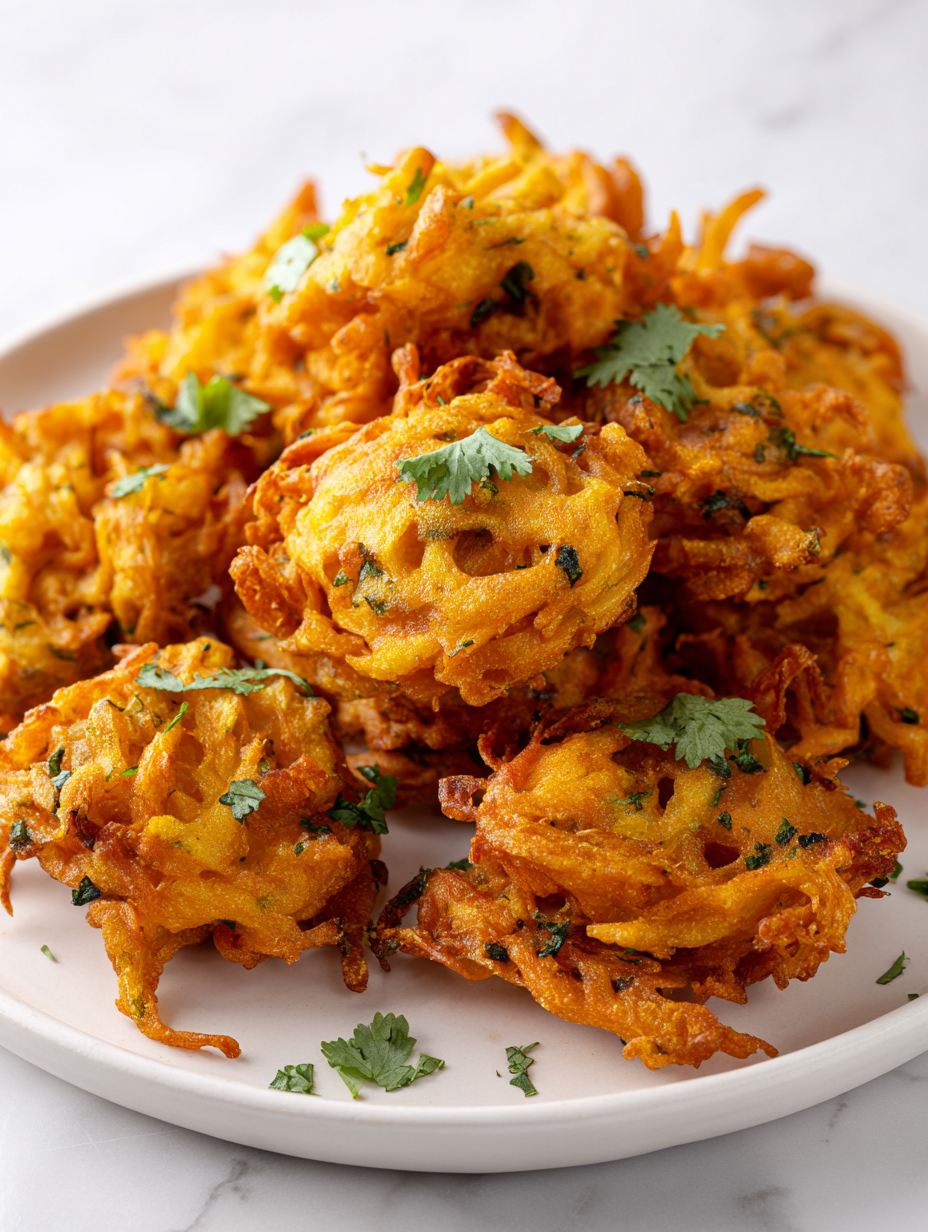
Onion Bhajis
Ingredients
Equipment
Method
- Gather all your equipment: a deep-fry thermometer, a heavy-bottomed pan or wok, a slotted spoon, and paper towels for draining. Having everything ready makes frying smoother and more fun.
- Peel and thinly slice the large onion into half-moons, aiming for about 2-3mm thickness. Keep the slices uniform so they fry evenly and look beautiful.
- In a mixing bowl, combine the chickpea flour, cumin seeds, turmeric, chili powder, and a generous pinch of salt. Toast the cumin seeds first in a dry pan until fragrant, then add to the dry mixture.
- Add the sliced onions to the dry mixture, tossing well to coat each piece thoroughly. This helps the batter cling to the onions and prevents clumping.
- Gradually pour in water, stirring as you go, until the mixture becomes a thick, scoopable batter—like a dense pudding. Adjust with more chickpea flour if it’s too runny.
- Pour about 2 inches of oil into your pan and heat over medium until the thermometer reads around 170°C (340°F). The oil should shimmer and give off a faint crackling sound when ready.
- Using a tablespoon or your hands, scoop a heaping spoonful of batter and gently shape or loosely drop it into the hot oil. Be careful not to overcrowd the pan.
- Fry the bhajis for about 3-4 minutes, turning occasionally, until they are deep golden brown and crispy. You’ll hear a crackling sound and see bubbles around them.
- Use a slotted spoon to lift out the crispy bhajis and drain them on paper towels. Repeat with the remaining batter, maintaining the oil temperature.
- Serve your onion bhajis immediately while still hot and crispy. Pair with chutney or yogurt for dipping and enjoy the fragrant, spicy bites.
Notes
Pro tips for perfect onion bhajis
- Bolded mini-head: Use a thermometer → Ensures the oil stays at 170°C/340°F for crispy results.
- Bolded mini-head: Chill the batter → Resting for 10 minutes helps prevent the bhajis from falling apart during frying.
- Bolded mini-head: Keep oil hot → Maintain temperature by adjusting heat to avoid soggy or burnt bhajis.
- Bolded mini-head: Do a test fry → Drop in a small amount of batter first to check color and crispness before frying the rest.
- Bolded mini-head: Don’t overcrowd the pan → Fry in batches for even cooking and maximum crunch.
- Bolded mini-head: Drain on paper towels → Absorbs excess oil and keeps bhajis crispy, not greasy.
- Bolded mini-head: Serve immediately → Best enjoyed hot, with a crispy exterior and tender onion inside.
Common mistakes and how to fix them
- FORGOT to check oil temperature, resulting in soggy bhajis. Use a thermometer for accuracy.
- DUMPED all batter in at once, causing crowded frying and uneven cooking. Fry in small batches.
- OVER-TORCHED the first batch, making them bitter. Adjust heat to maintain golden color.
- FORGOT to drain excess oil, leaving bhajis greasy. Use paper towels immediately after frying.
Quick fixes and pantry swaps
- When oil shimmers and crackles, it’s ready—rescue with a small test batch if unsure.
- Splash a tiny drop of batter—if it sizzles immediately, oil is at perfect temp.
- Patch soggy bhajis by oven-reheating at 180°C/350°F for crispness and warmth.
- DUMPED too much batter in? Fry in smaller batches to prevent sogginess and uneven cooking.
- Use rice flour instead of chickpea for a lighter, less fragrant crunch in a pinch.
Prep, store, and reheat tips
- You can prep the sliced onions and dry ingredients up to a day ahead; keep them in airtight containers in the fridge. The onions may release a bit more aroma overnight, adding depth.
- Store leftover cooked bhajis in an airtight container in the fridge for up to 2 days. They’ll lose some crispness but can be reheated in the oven for a few minutes until crackly again.
- Reheating: Bake at 180°C/350°F for 5-7 minutes or until warmed through and crispy. Avoid microwaving, as it makes them soggy and dulls the texture.
- Raw batter can be made ahead and kept covered in the fridge for about 4 hours. The flavors meld slightly, but best results come from frying fresh to preserve the crunch.
- For longer storage, freeze uncooked batter in a sealed bag for up to a month. Thaw in the fridge, then fry as usual, expecting a slightly different, softer texture.
Top questions about onion bhajis
1. Can I use red onions instead of yellow?
Use yellow onions for sweetness and smoky aroma, but red onions work if you prefer a sharper, milder bite.

2. What’s a good substitute for chickpea flour?
Chickpea flour creates that crispy exterior; if gluten-free, rice flour is an option, but it’s less hearty and fragrant.
3. Can I skip the spices or reduce heat?
Toast cumin seeds first to release their nutty aroma, which hits your nose during cooking. You can skip or reduce chili for milder bites.
4. How do I get the batter right consistency?
Add water gradually until the batter is thick but scoopable, like a dense pudding. Too much makes it runny, too little is hard to coat.
5. What oil is best for frying?
Use vegetable or sunflower oil for high smoke point and neutral flavor. For a healthier option, try air-frying, but it won’t be as crispy.
6. How do I season the batter properly?
Taste the batter before frying—adding salt gradually until balanced enhances the overall flavor, especially if onions are mild.
7. Should I add baking soda?
A pinch of baking soda helps the bhajis puff slightly, making them lighter. Too much can cause fragility.
8. How do I know when the oil is hot enough?
Ensure oil is around 170°C/340°F—shimmering and crackling indicate readiness. Use a thermometer for accuracy.
9. How can I tell when they’re done?
The bhajis should be deep golden, crispy outside, soft inside. They should crackle when frying and have a uniform color.

10. Can I make onion bhajis ahead of time?
Serve immediately while hot for maximum crispness. Reheat in oven for a few minutes if needed, to regain crunch.
Making onion bhajis at home wraps you in a warm, fragrant chaos that’s hard to replicate in a restaurant. Each batch is a small, imperfect victory, filled with crackles and smoky sweetness. It’s honest, messy cooking that reconnects me to simple pleasures amidst busy days.
These crispy bites aren’t just snacks—they’re a reminder that good things often come from the chaos of the kitchen. They bring a little chaos, a lot of flavor, and a moment of proud, spicy comfort. Sometimes, that’s exactly what I need.