
Vegetable cutlets might seem simple, but getting the texture just right is an art. It’s about balancing the tender, mashable inside with a crispy exterior that invites a satisfying crunch. I’ve spent years tweaking my method to make each bite feel like a small celebration of textures and flavors.
This recipe is my go-to when I want a snack that feels familiar yet elevated. It’s perfect for those chaotic weeknights when I need something quick but still crave that satisfying, layered bite. Plus, it’s a great way to sneak more veggies into any meal without the fuss.
What keeps me coming back to this dish is how each ingredient plays a role—peas for sweetness, spices for warmth, and breadcrumbs for that irresistible crunch. It reminds me that even humble ingredients, when balanced well, can turn into something truly memorable.
Focusing on the overlooked art of balancing texture and flavor in vegetable cutlets, turning a humble snack into a sensory experience that highlights the importance of each ingredient’s role in the final bite.
Balancing Texture and Flavor
- There’s something about the aroma of crispy edges that always pulls me in, like a warm hug from the kitchen.
- I remember the first time I nailed the perfect mash—felt like I unlocked a secret for turning humble veggies into treasure.
- Sometimes, I get lost in the chaos of frying, but the sound of crackling oil is oddly soothing.
- Nothing beats the pride of serving these with a dollop of tangy chutney, watching everyone’s eyes light up.
- This recipe’s a lifesaver on busy days—quick, satisfying, and somehow makes me feel like a real cook.
The story behind this recipe
- Growing up, my grandma’s kitchen was filled with the smell of spiced vegetables and sizzling oil. Those vegetable cutlets weren’t just snacks; they were a way to bring everyone together around the table. I’d watch her mix, shape, and fry with a kind of quiet confidence that I still try to mimic.
- Over the years, I realized how much I love the process of turning humble ingredients into something crispy and flavorful. It’s a recipe born from those nostalgic afternoons but tweaked to suit my modern, chaotic life—fast, satisfying, and endlessly adaptable.
- Making these cutlets is a small act of memory and creativity—each batch a reminder that good food is about balancing textures and flavors, just like life itself.
Trivia and Origins
- Vegetable cutlets have roots in street food vendors across India, where they served as quick, nourishing snacks.
- The concept likely evolved from traditional fritters, adapting local spices and vegetables for a more balanced bite.
- In many cultures, similar patties emerged as a way to utilize leftover veggies, turning them into something delicious and portable.
Breakdown of Key Ingredients
- Potatoes: I like them fluffy inside, so I boil until just tender—avoid overcooking or they’ll be mushy. You want a sturdy base that holds together.
- Mixed Vegetables: Carrots, peas, corn—bright, sweet, and colorful. Grate or chop finely so they blend seamlessly. They add texture and a pop of freshness.
- Breadcrumbs: For that crispy crust, I use panko if I want more crunch, or regular for softer bite. Toast them lightly if you want a nuttier flavor.
- Spices: Cumin, coriander, a dash of chili powder—these lift the flavor without overpowering. Adjust to your heat tolerance and keep fragrant aroma in mind.
- Binding Agents: Egg or chickpea flour—egg gives a tender hold, chickpea flour adds a nutty note and is great for vegan tweaks. Make sure the mixture is moist but not sticky.
- Oil: Neutral oil like sunflower or canola—hot enough to sizzle but not smoke. It’s the key to that golden, crispy exterior. Test with a small piece first.
- Fresh Herbs: Cilantro or mint—chop finely and add last. They bring a burst of brightness and freshness to each bite, essential for balancing the richness.
Spotlight on Key Ingredients
Potatoes:
- I prefer starchy, fluffy potatoes—when mashed, they should be smooth and slightly sticky, helping the cutlets hold together. Avoid overcooking or they become gluey.
- Mixed Vegetables: Bright, sweet, and tender—finely chopped or grated to blend seamlessly into the mash. Their moisture adds flavor and a pop of color, so don’t skip the peas or carrots.
Breadcrumbs & Herbs:
- Breadcrumbs: I use panko for extra crunch and lightness—toast them lightly for a nuttier flavor. They form that irresistible crispy crust and absorb excess moisture to prevent sogginess.
- Fresh Herbs: Cilantro or mint—chop finely and add last. They bring a lively brightness that cuts through the richness, especially when the cutlets are hot and fragrant.
Notes for ingredient swaps
- Dairy-Free: Use mashed avocado instead of yogurt for creaminess, which adds a mild, buttery flavor without dairy.
- Gluten-Free: Swap regular breadcrumbs for crushed rice crackers or gluten-free panko to keep the crunch without gluten.
- Vegan: Replace egg with a flaxseed or chia seed slurry—mix 1 tablespoon ground seeds with 3 tablespoons water; it binds just as well.
- Low-Sodium: Use unsalted butter or oil and omit added salt; rely on spices and herbs for flavor punch.
- Fresh Herbs: Fresh cilantro or mint brighten the cutlets with lively aroma and fresh flavor—dried herbs won’t give the same vibrancy.
- Vegetables: If you don’t have peas or carrots, finely chopped bell peppers or zucchini work well for moisture and color.
- Oil: Use sesame or coconut oil for a different aroma and flavor profile—these oils add their own nutty or tropical notes.
Equipment & Tools
- Large mixing bowl: To combine all ingredients evenly.
- Potato masher: To mash boiled potatoes smoothly.
- Sharp knife: To grate vegetables finely.
- Frying pan: To cook the cutlets evenly.
- Spatula: For flipping and removing cutlets.
Step-by-step guide to vegetable cutlets
- Gather all equipment: a large mixing bowl, a potato masher, a sharp knife, a frying pan, and a spatula.
- Peel and grate 2 cups of mixed vegetables—carrots, peas, corn—set aside.
- Boil 3 large potatoes until just tender, about 15 minutes at 100°C (212°F). Drain and mash until smooth.
- In the mixing bowl, combine mashed potatoes, grated vegetables, 1/2 cup breadcrumbs, 1 beaten egg, 1 teaspoon cumin, 1 teaspoon coriander, and a pinch of chili powder.
- Mix thoroughly until the ingredients form a cohesive, slightly moist mixture. If too sticky, add a bit more breadcrumbs.
- Shape the mixture into small, flat patties, about 2 inches diameter and 1/2 inch thick.
- Heat 1/4 inch of neutral oil in the frying pan over medium heat (around 160°C/320°F).
- Test the oil: drop a small piece of mixture—if it sizzles and turns golden in 30 seconds, it’s ready.
- Fry the cutlets in batches: cook for 3-4 minutes per side, until golden brown and crispy. Adjust heat if smoking occurs.
- Check for doneness: the exterior should be crisp and golden, the inside hot and firm. If not, cook a bit longer.
- Remove with a slotted spoon and drain on paper towels for 1-2 minutes.
- Let rest for 2 minutes before serving to allow flavors to settle and surface to crisp further.
- Serve hot with a side of tangy chutney or yogurt dip. Garnish with chopped cilantro or mint.
Let the cutlets rest on paper towels for a minute to drain excess oil. Serve immediately with your preferred chutney or yogurt. For extra crunch, serve them slightly cooled so the surface remains crisp.
How to Know It’s Done
- Color: cutlets should be golden brown and crisp.
- Texture: outside crispy, inside firm but moist.
- Appearance: uniform shape, no raw spots, and a fragrant aroma of spices.
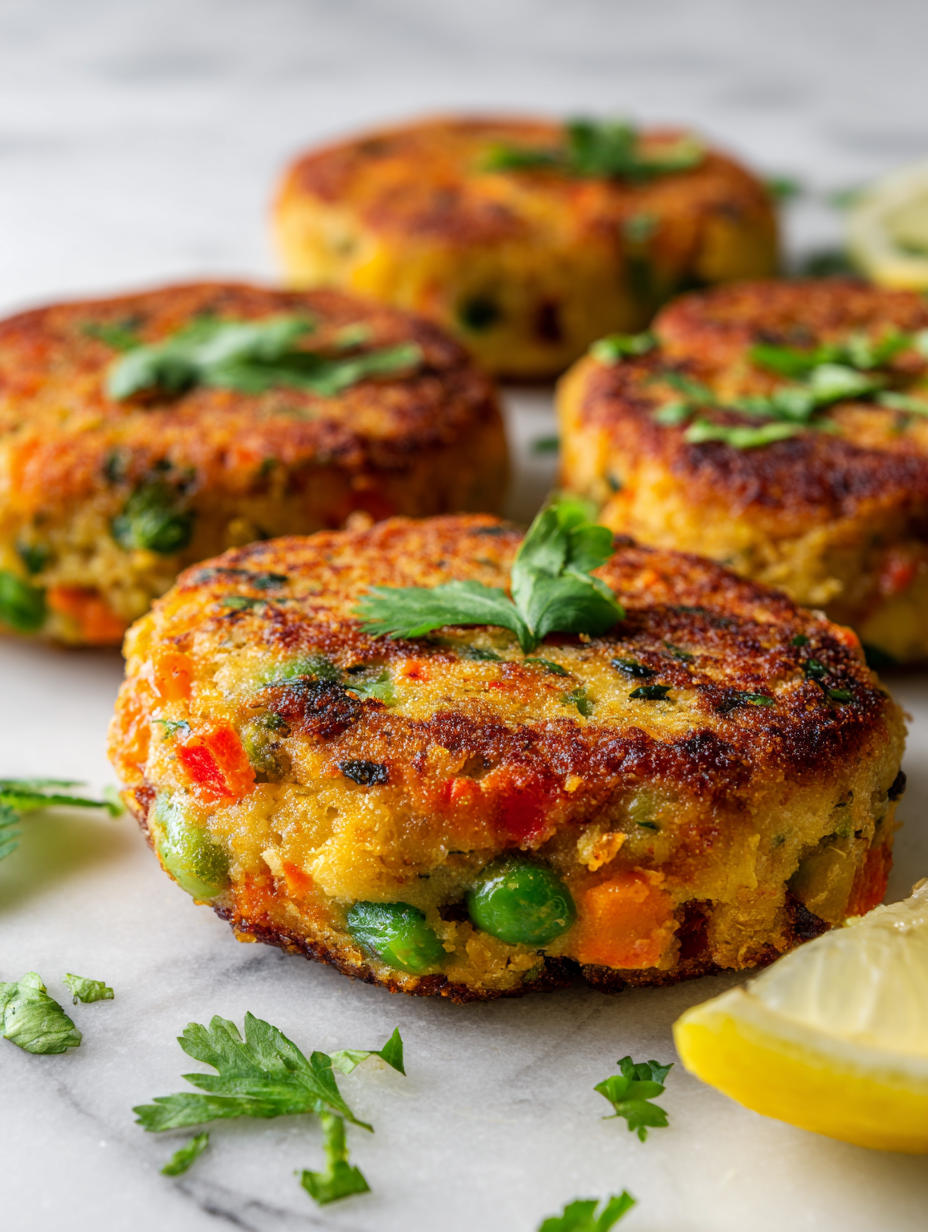
Vegetable Cutlets
Ingredients
Equipment
Method
- Peel and grate the mixed vegetables, then set aside. Peel the potatoes, boil them until just tender, about 15 minutes, then drain and mash until smooth and fluffy.
- In a large mixing bowl, combine the mashed potatoes, grated vegetables, cumin, coriander, chili powder, and beaten egg. Mix well until all ingredients are evenly incorporated and the mixture is cohesive but still moist.
- Add the breadcrumbs and chopped herbs to the mixture, folding gently to evenly distribute. If the mixture feels too sticky to shape, sprinkle in a little more breadcrumbs and fold again.
- Shape the mixture into small, flat patties approximately 2 inches in diameter and 1/2 inch thick. Keep them uniform for even cooking and a pleasing presentation.
- Heat vegetable oil in a frying pan over medium heat until shimmering and hot, around 160°C (320°F). To test if the oil is ready, drop a small piece of mixture into the oil; it should sizzle immediately and turn golden in about 30 seconds.
- Carefully place the shaped cutlets into the hot oil, working in batches to avoid overcrowding. Fry for 3-4 minutes per side, until golden brown and crispy, flipping gently with a spatula.
- Once golden and crispy, remove the cutlets from the pan using a slotted spatula and drain on paper towels for 1-2 minutes to absorb excess oil. Continue frying the remaining cutlets.
- Let the cutlets rest for a couple of minutes; this helps firm up the texture and enhances crunch. Garnish with additional chopped herbs if desired.
- Serve the vegetable cutlets hot with a side of tangy chutney or yogurt dip. Enjoy the crispy exterior and tender, flavorful inside in every satisfying bite!
Top Tips for Perfect Cutlets
- Use a gentle touch: When mixing, fold ingredients carefully to keep the mixture light and prevent tough cutlets.
- Maintain oil temp: Keep the oil steady at 160°C (320°F); too hot and the exterior burns before the inside cooks.
- Shape evenly: Use a cookie cutter or the back of a spoon to get uniform patties that cook evenly.
- Check for crispness: Flip when the edges turn golden and feel firm—resist the urge to move too early.
- Drain excess oil: Rest cooked cutlets on paper towels to keep them crispy and prevent sogginess.
- Adjust spice levels: Taste the mixture before shaping; add more chili or herbs if needed for a punch.
- Keep the mixture chilled: Refrigerate for 10-15 minutes if too sticky to shape easily, making handling smoother.
Common mistakes and how to fix them
- FORGOT to drain vegetables → Squeeze out excess moisture before mixing to prevent sogginess.
- DUMPED oil too hot → Wait for oil to shimmer and reach 160°C (320°F) before frying.
- OVER-TORCHED cutlets → Reduce heat if they brown too quickly; aim for golden crust, not burnt.
- MISSED resting time → Rest cutlets on paper towels for 1-2 minutes to drain oil and set texture.
Quick Fixes and Pantry Swaps
- When oil shimmers and crackles, your pan is ready for frying.
- Splash a tiny drop of water in oil—if it dances and sizzles, proceed.
- Patch sticky mixture with a sprinkle of breadcrumbs to firm it up.
- Shield overcooked cutlets with a paper towel to absorb excess oil quickly.
- Rescue a burnt batch by removing from heat immediately and starting anew with fresh oil.
Prep, store, and reheat tips
- Prepare the vegetable mixture and shape the cutlets a day in advance; store covered in the fridge for up to 24 hours. The flavors deepen overnight.
- Cooked cutlets can be refrigerated for up to 2 days. Reheat in a hot skillet for 2-3 minutes per side until crisp and heated through, with a satisfying crackle.
- Frozen uncooked cutlets can last up to 3 months. Thaw in the fridge overnight, then fry as usual. Expect slightly less crispness but still delicious.
- Reheating from frozen: cook in a preheated oven at 180°C (356°F) for 10-12 minutes, or until hot and crispy, with a golden sheen and inviting aroma.
- The texture may soften slightly after storage, but a quick re-fry or oven blast restores a crispy exterior and fresh aroma.
Top questions about vegetable cutlets
1. What potatoes are best for the cutlets?
Use firm, starchy potatoes like Russets for a fluffy interior that holds together well. Avoid overcooking to prevent mushiness.
2. Can I substitute other vegetables?
Finely grated carrots and peas add sweetness and color. If you don’t have peas, zucchini works but may be a bit wetter.
3. What type of breadcrumbs should I use?
Breadcrumbs give the crust crunch. Panko is lighter and crispier, while regular breadcrumbs are softer but still effective.
4. Can I make these vegan?
Eggs help bind, but chickpea flour or flaxseed slurry are good vegan options. They keep the mixture cohesive without eggs.
5. How hot should the oil be?
Ensure oil is hot enough—around 160°C (320°F)—before frying. Test with a small piece; it should sizzle immediately.
6. How can I shape the cutlets evenly?
Shape the mixture into uniform patties for even cooking. Use a cookie cutter or the back of a spoon for consistency.
7. How long do I fry the cutlets?
Fry in batches to avoid crowding. Cook each side for about 3-4 minutes until golden and crispy.
8. Should I rest the cutlets before serving?
Rest cooked cutlets on paper towels for a minute to drain excess oil. Serve hot for the best crunch and flavor.
9. How do I reheat leftovers?
To reheat, fry briefly in hot oil or bake at 180°C (356°F) until crispy, about 10 minutes. They re-crisp beautifully.
10. What if the mixture is too sticky?
If mixture feels too sticky, chill it in the fridge for 10-15 minutes. It firms up, making shaping easier.
These vegetable cutlets aren’t just a snack; they’re a reminder that simple ingredients can come together in a way that feels satisfying and real. When you get that perfect balance of crispy exterior and tender inside, it’s a small win worth savoring.
In a world of fast fixes, this recipe offers a moment of honest effort and genuine flavor. Plus, they’re versatile enough to adapt to whatever veggies you have on hand, making them a handy staple for weeknights or lazy weekends.